Where Tradition, Nature and Craft Meet
In the colourful textile heritage of Rajasthan, few crafts capture the beauty of simplicity quite like Bagru hand block printing.
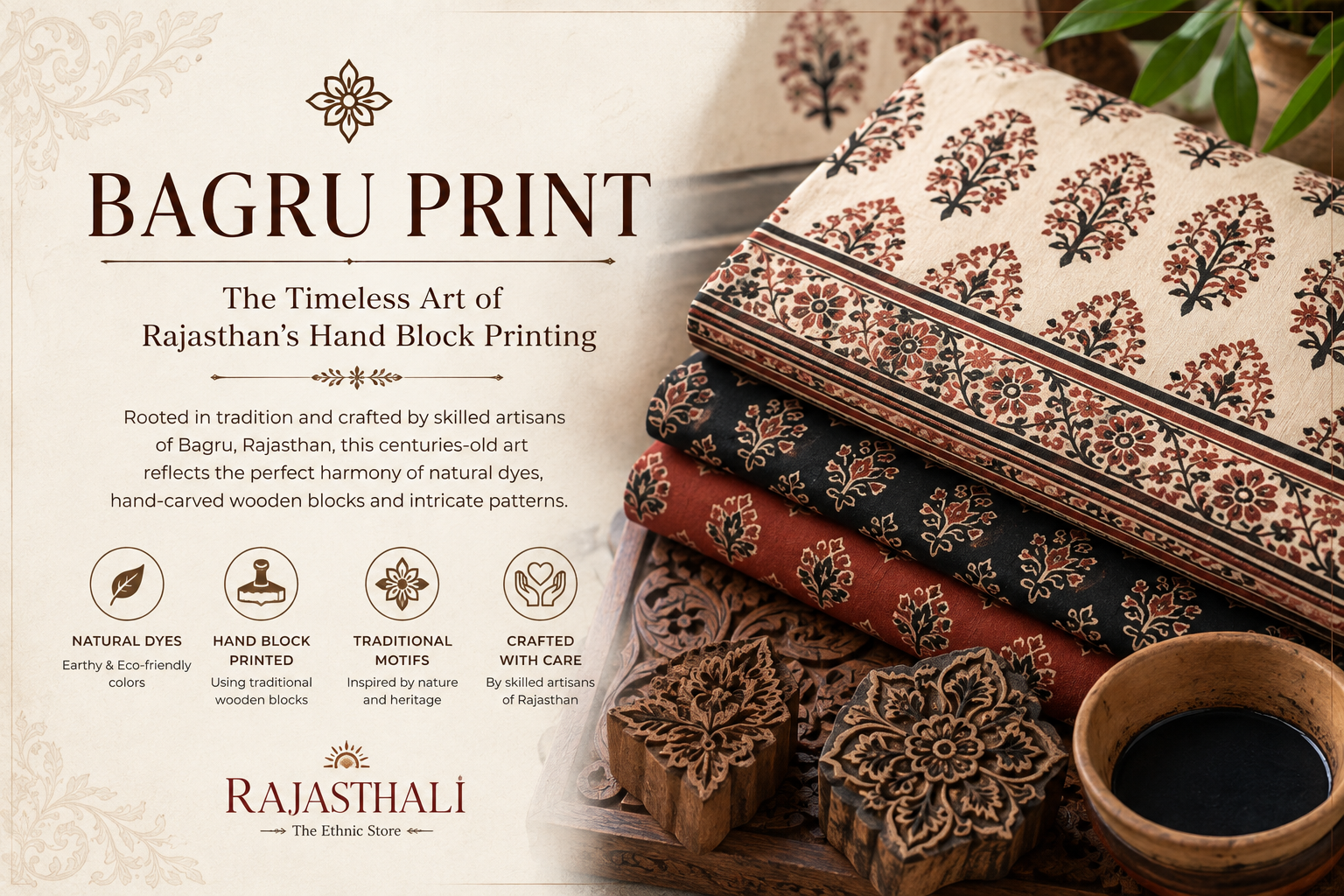
Originating in Bagru, a historic town near Jaipur, this traditional craft is known for its earthy colours, floral motifs, hand-carved wooden blocks and the skilled hands of generations of artisans. The craft is closely associated with the Chhipa community, whose traditional knowledge of printing and dyeing has been passed down through generations.
Bagru is more than a textile print. It represents a relationship between fabric, natural colours, wood, water and human craftsmanship.
The Heritage of Bagru Print
Bagru developed as an important centre of hand block printing because the region offered conditions suitable for the traditional processes of washing, dyeing and drying textiles. The nearby Sanjariya river and the local soil played an important role in the craft’s development.
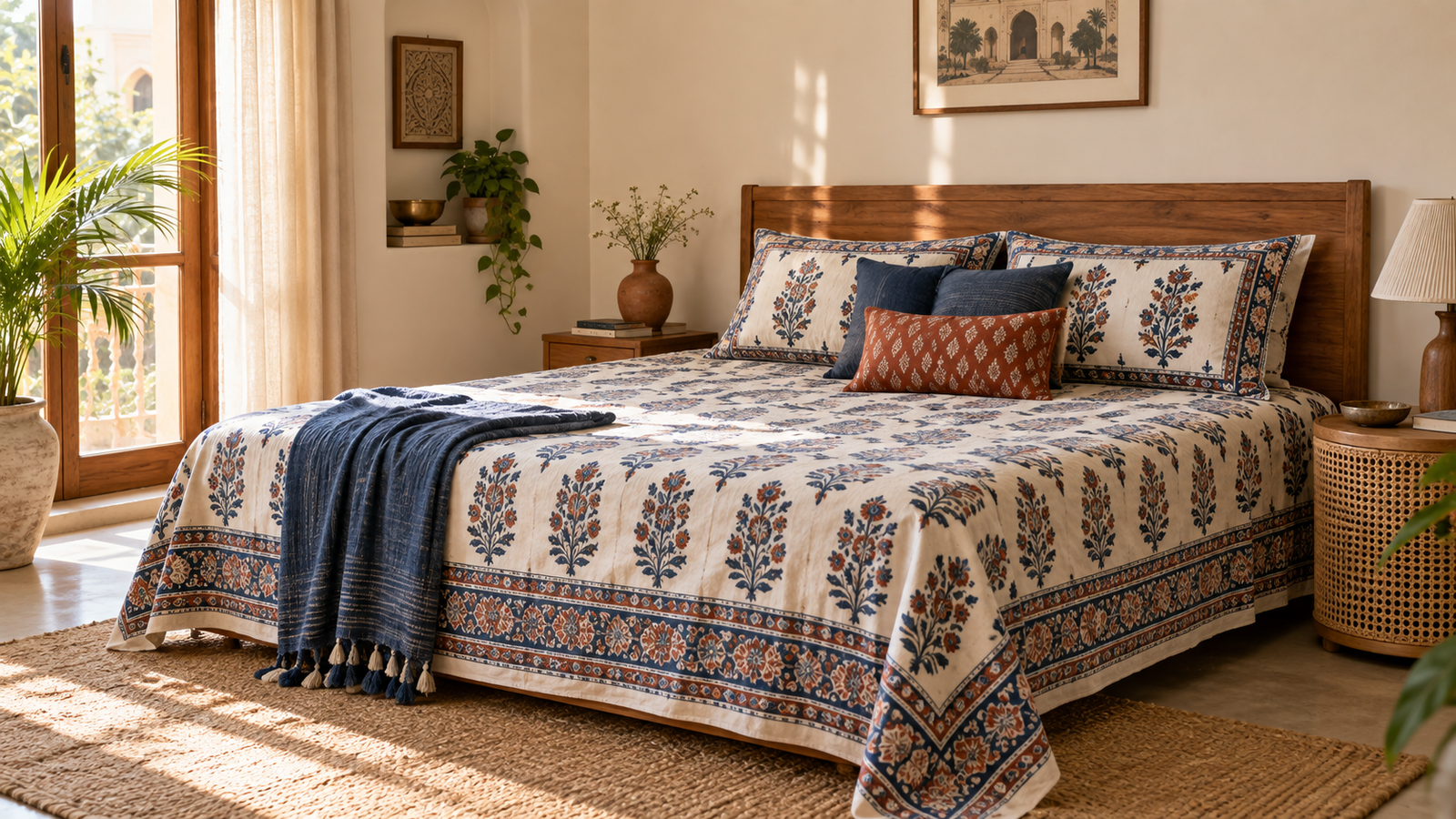
For generations, Bagru textiles were used for garments such as ghagras, odhnis, sarees and turbans, as well as household textiles including bedspreads, cushion covers and quilts.
Today, the craft continues to evolve while retaining its traditional character.
What Makes Bagru Print Special?
The beauty of Bagru lies in its handmade imperfections.
Unlike machine-made prints, every impression is created by pressing a carved wooden block onto the fabric by hand. Small variations in alignment, colour and pressure are part of what makes a genuine hand block printed textile unique.
Traditional Bagru printing is especially recognised for its earthy and natural colour palette, with shades such as:
- Deep black
- Terracotta and red
- Indigo blue
- Brown
- Mustard and yellow
- Natural off-white
These colours give Bagru textiles their warm, rustic and distinctly Rajasthani appearance.
The Art of the Wooden Block
At the heart of Bagru printing is the hand-carved wooden block.
Artisans carefully carve designs into blocks of wood, creating the detailed patterns that will eventually appear on the fabric. A single design may require multiple blocks for outlines, backgrounds and details.
The artisan places the block carefully on the fabric, applies the dye or printing paste and presses it firmly. The process is then repeated, impression after impression, until the complete design emerges.
It is a craft that demands patience, precision and years of experience.
Natural Dyes and Traditional Colours
One of the most distinctive aspects of traditional Bagru printing is its connection with natural dyeing.
Traditional colours can be prepared from natural and mineral materials. Black, for example, can be created using iron-based ingredients, while red can be produced using madder and alum. Other traditional shades include indigo, yellow, brown and grey.
The result is a palette that feels naturally connected to the landscape of Rajasthan.
Dabu: The Traditional Resist Technique
Bagru is also closely associated with Dabu, a traditional mud-resist printing technique.
In resist printing, selected areas of the fabric are covered with a resist paste before dyeing. The protected portions resist the dye, creating the characteristic patterns once the fabric is washed and finished.
This technique allows artisans to create beautiful combinations of light and dark shades, layered motifs and intricate repeating patterns.
Dabu and direct block printing together form an important part of the textile traditions associated with Bagru.
Motifs Inspired by Nature
Bagru designs are deeply inspired by the natural world.
Traditional motifs include flowers, leaves, vines, buds and geometric arrangements. Popular floral forms include gainda, gulab and kamal, while smaller repeating patterns or butis create rhythm across the fabric.
These motifs can appear individually or be arranged into borders, all-over patterns and larger decorative compositions.
The result is a style that feels both traditional and effortlessly contemporary.
From Rajasthan to Modern Homes and Wardrobes
Traditionally, Bagru prints were used for clothing and everyday textiles. Today, the craft has found its way into a much wider range of products.
You can find Bagru-inspired and Bagru hand block textiles in:
Sarees • Dupattas • Kurtis • Dresses • Shirts • Bedsheets • Cushion Covers • Curtains • Bags • Home Furnishings
Its earthy colours and handcrafted appearance make Bagru especially appealing to people who appreciate textiles with a story.
Why Hand Block Printing Still Matters
In a world of mass-produced textiles, every hand block printed fabric carries something different: the mark of the artisan.
The slight variations in the print are not flaws. They are reminders that the fabric has been created by hand rather than reproduced entirely by a machine.
Supporting traditional Bagru printing therefore means supporting not only a beautiful textile tradition, but also the artisans and communities who continue to preserve their craft.
Bagru Print: A Tradition That Continues
Bagru hand block printing is a beautiful example of Rajasthan’s living craft heritage.
From the carving of wooden blocks to the preparation of colours, from the careful placement of each impression to the final washing and drying of the fabric, the process reflects generations of knowledge and skill.
Bagru is not simply a print on fabric. It is a piece of Rajasthan’s artistic heritage — created by hand, inspired by nature and carried forward by generations.
At Rajasthali, we celebrate the beauty of India’s traditional crafts and bring the richness of Rajasthan’s textile heritage closer to you.
Discover the timeless beauty of Bagru Print and bring home a piece of Rajasthan.
Leave a comment