
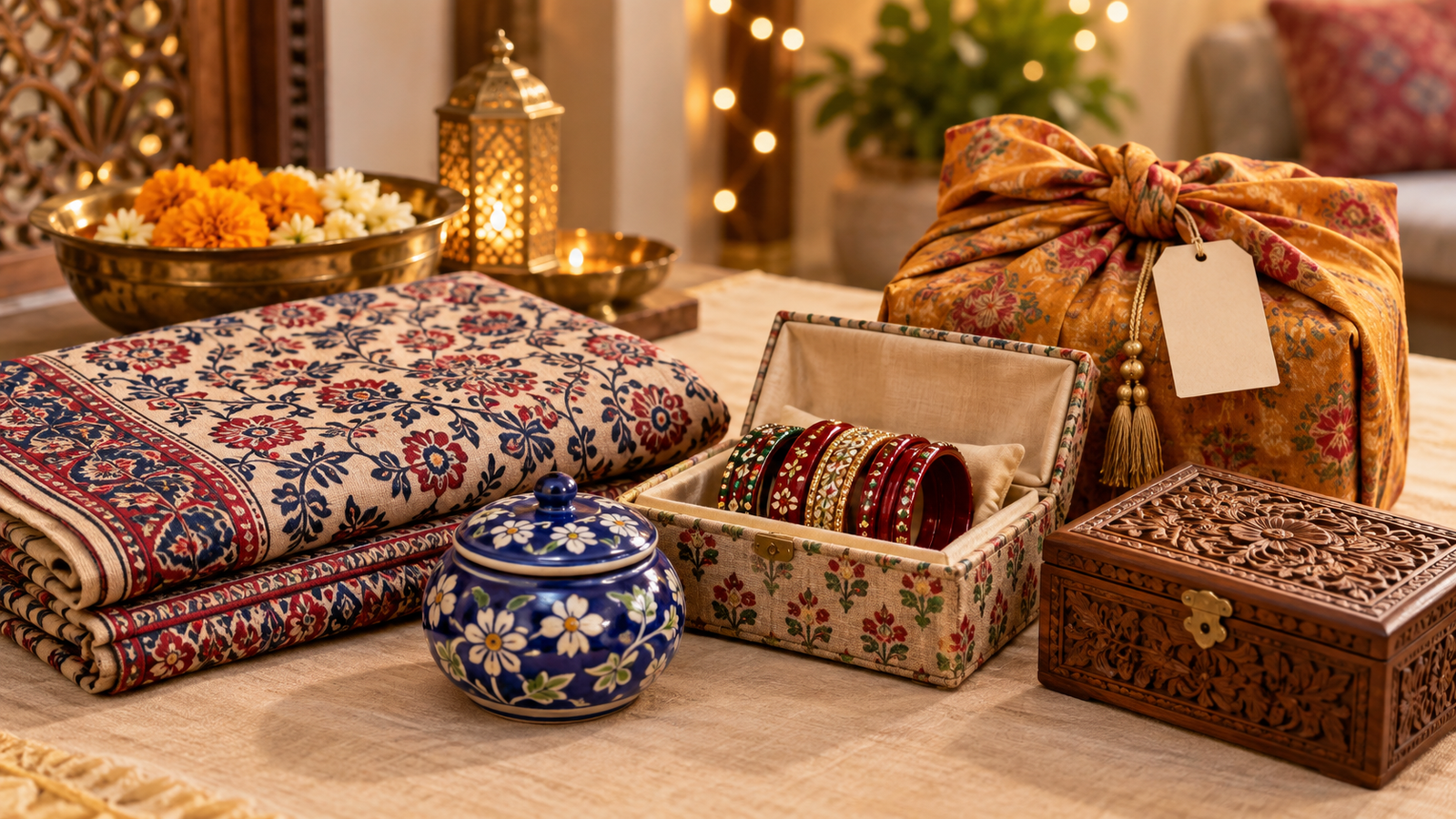
Rajasthani décor is memorable because it turns useful objects into expressions of colour and craft. Printed textiles, painted pottery, carved details, mirrors and handmade accents can make a home feel warmer and more personal. The most successful interiors, however, use these elements with breathing room rather than placing every craft in one space.
This room-by-room guide offers a practical way to introduce Rajasthan-inspired handicrafts into contemporary homes. You can begin with one piece and build gradually, whether your style is minimal, traditional or somewhere between the two.
Choose one hero craft, one supporting textile and one small accent for each room. Repeat a colour or material to connect them, then leave enough plain space for the handmade details to be noticed.
Living Room: Create a Warm First Impression
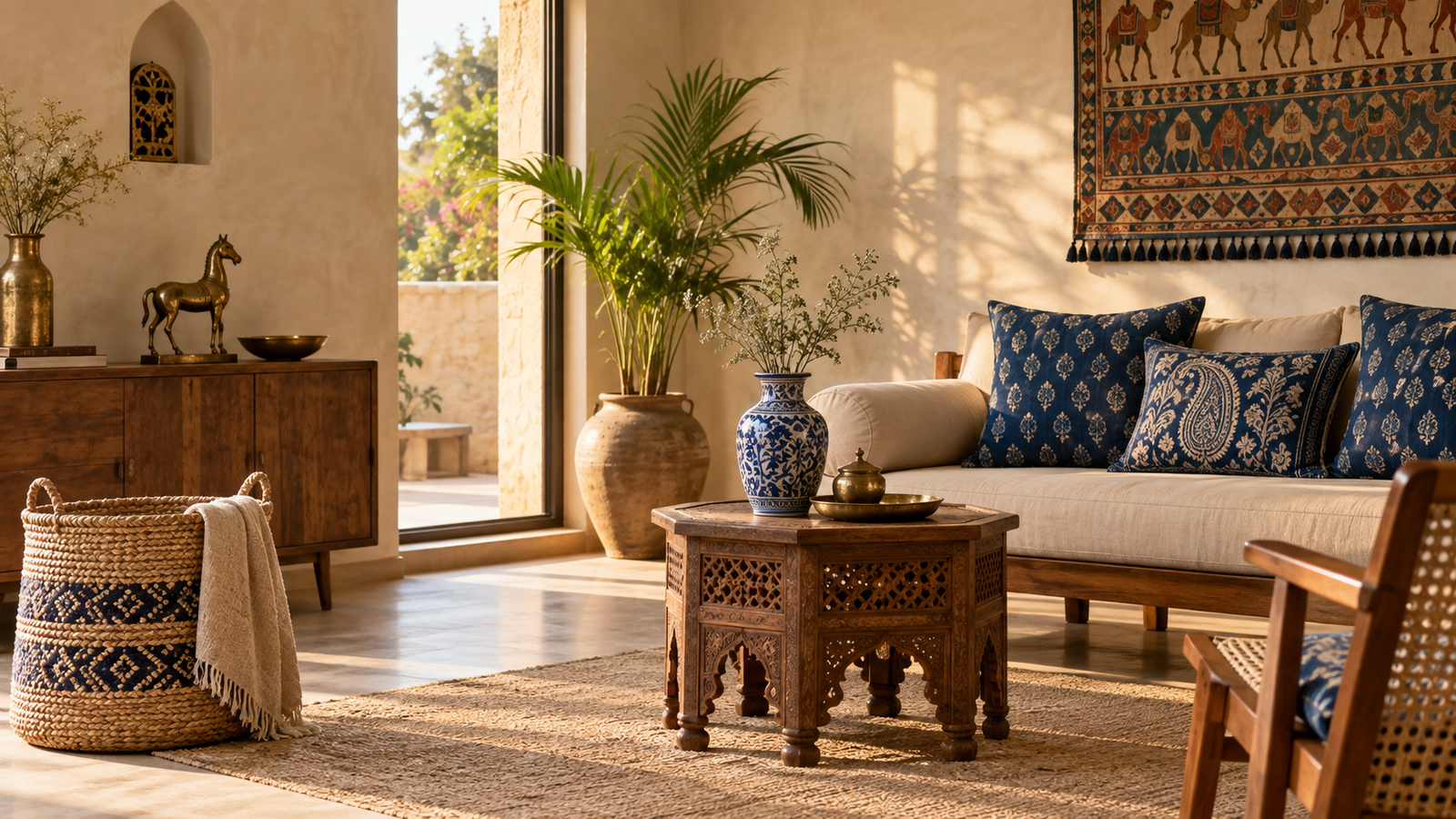
The living room is ideal for a confident craft statement. Start with one anchor: a hand block printed throw, an embroidered wall piece, a painted decorative object or a group of blue pottery accents. The anchor should be visible from the entrance and large enough to establish the room’s mood.
Support it with cushions in two scales. If the main textile has a detailed floral print, add mostly plain cushions and one simple stripe. If the sofa is neutral, two or three printed cushions can provide colour without making the seating look crowded.
Wood, cane and brass sit naturally beside Rajasthani craft. A carved side table or woven basket can add texture, but avoid using carved furniture on every surface. One substantial handcrafted piece has more impact than several small pieces competing for attention.
Bedroom: Let Textiles Lead
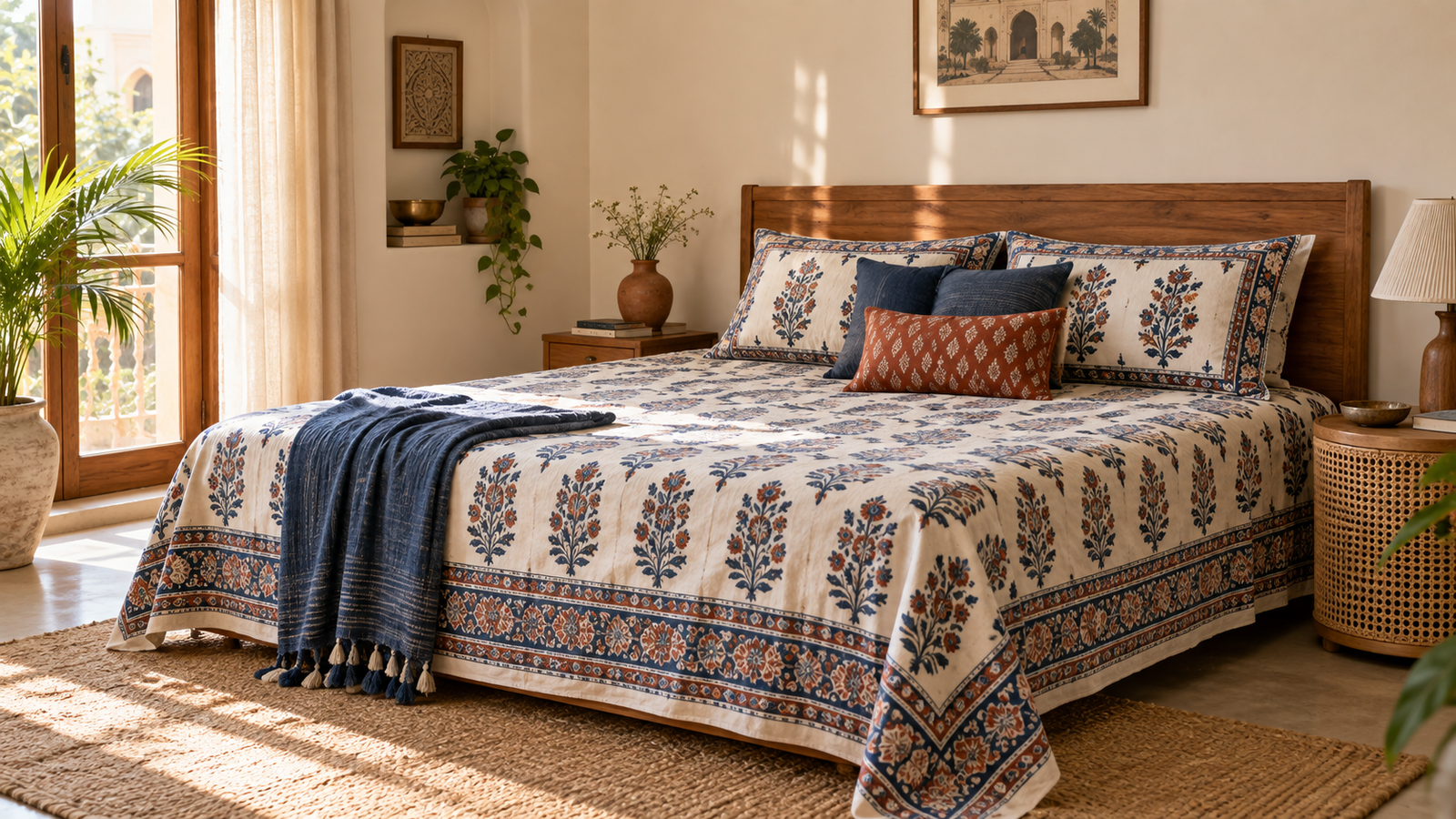
Bedding occupies the largest visual area, so a printed bedsheet or quilt can define the entire bedroom. Pull one shade from it for a cushion or lamp base, then keep the curtains and walls calm. This creates connection without exact matching.
A small handcrafted tray on the bedside table can hold jewellery, while a fabric wall hanging above the bed offers a softer alternative to framed art. If the bedding is already bright, choose a wall piece with fewer colours. Warm bedside lighting brings out earthy reds, indigo and natural cotton beautifully.
Dining Area: Make Everyday Meals Feel Special
A block printed runner or set of table mats is an easy starting point. Use plain crockery so the textile remains visible. Add one central arrangement—perhaps a handcrafted bowl, a compact vase or a brass-toned accent—rather than a line of many small ornaments.
For daily use, choose washable cotton textiles and keep the table setting simple. During festivals, layer in cloth napkins, flowers and warm lights. A flexible base lets the same dining space move from weekday breakfast to celebration without a complete redesign.
Entryway: Tell Your Home’s Story Quickly
An entryway has little space but strong visual importance. A narrow console with a decorative tray, a small mirror and one painted accent is often enough. If you use an ornate framed mirror, keep the console surface restrained. If the wall is plain, a cluster of three small craft pieces can create rhythm.
Function matters here. Include a bowl for keys or a compact box for everyday essentials. When a handcrafted object also solves a practical problem, it becomes part of the home instead of feeling like display-only décor.
Kitchen: Use Craft in Durable, Useful Ways
Keep delicate items away from heat and moisture. Introduce colour through washable towels, a small printed curtain, a sturdy container or wall accents placed beyond the cooking zone. Open shelves look best when functional objects and decorative pieces share a limited palette.
Avoid crowding worktops. One attractive handcrafted container is more useful than several objects that must be moved every time you cook. In compact kitchens, even a framed textile fragment can add character without occupying a surface.
Balcony and Reading Corner: Build a Relaxed Retreat
Use floor cushions, a light throw and a small side table to turn an unused corner into a comfortable retreat. Choose fabrics suitable for the location and bring them indoors when not in use if they are not designed for outdoor exposure. Terracotta tones, indigo and leafy greens work especially well beside plants.
A single hanging accent or lantern-style light can define the corner after sunset. Keep pathways clear and favour pieces that are easy to move and clean.
How to Mix Colours Without Visual Clutter
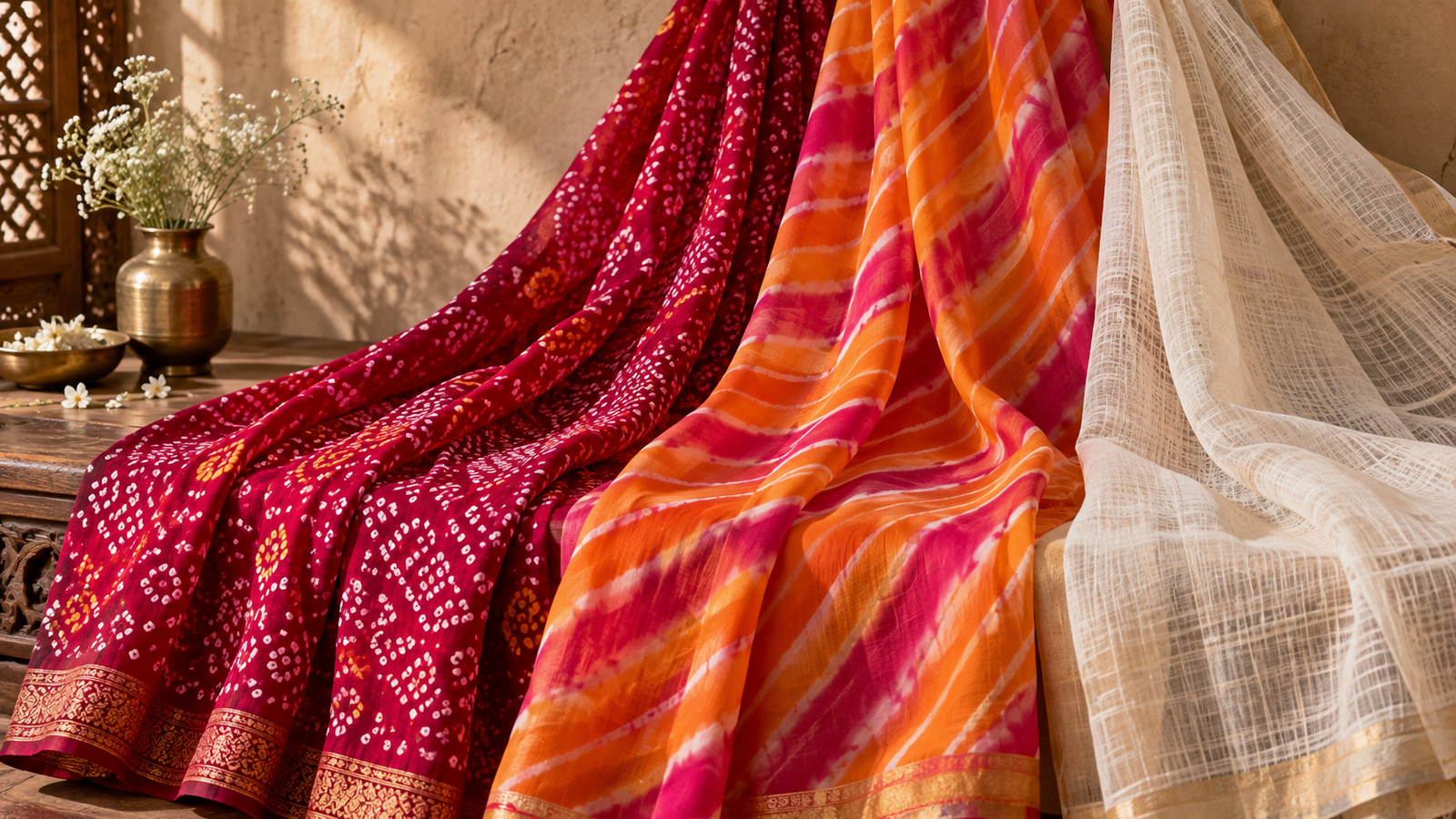
Rajasthani craft celebrates strong colour, but balance comes from repetition and restraint. Choose a dominant neutral, one main colour and one smaller accent. For example, cream walls and upholstery may support indigo textiles with touches of rust. Warm beige may support maroon with a little mustard.
Do not try to represent every colour in each object. When two pieces share even one shade, they can feel related. Natural materials also act as visual pauses between patterns.
Mixing Traditional Craft With Modern Furniture
Clean-lined furniture gives handmade pieces a clear stage. A contemporary grey sofa can carry block printed cushions; a simple wooden bed can hold a colourful quilt; a minimal shelf can frame one sculptural craft object. The contrast makes both the modern and traditional elements more distinct.
Repeat shapes as well as colours. A round mirror can echo a rounded pottery form, while the geometry of a rug can connect to a square cushion arrangement. These quiet relationships make a mixed interior feel planned.
Choose Handcrafted Pieces Thoughtfully
Look at finish, material, usability and the natural variations of handwork. Minor differences in print alignment, painted lines or surface texture can be part of the maker’s process. At the same time, the piece should be stable, cleanly finished and suitable for its intended use.
Buy slowly and choose objects you will enjoy living with. A home gains character through pieces that carry memories—something chosen during a celebration, received as a gift or used at family gatherings.
Care and Rotation
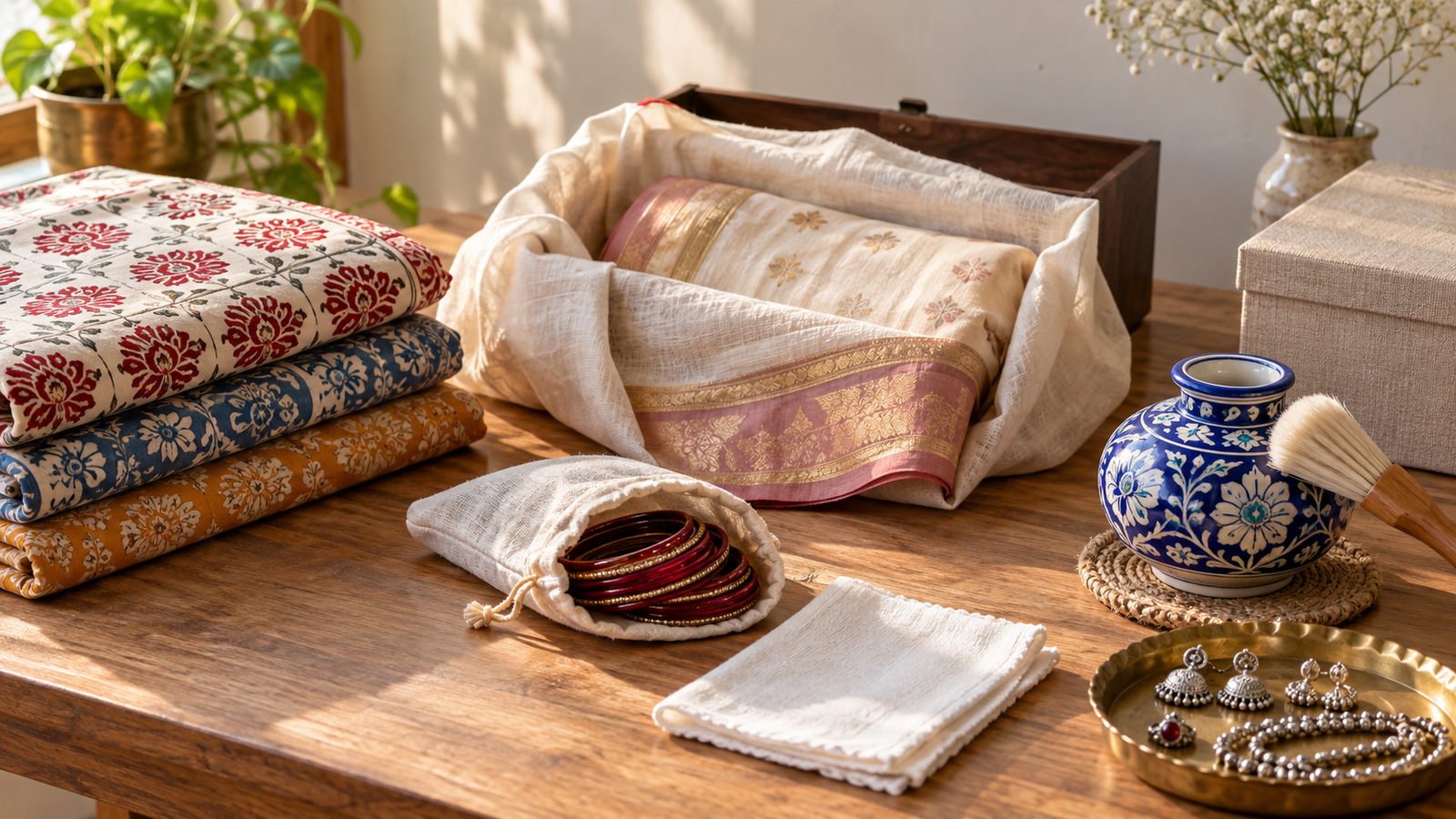
Dust decorative pieces gently and follow material-specific cleaning instructions. Keep delicate colour and fabric away from prolonged direct sunlight. Wash textiles as directed and store them only when completely dry. Rotating cushions, throws and tabletop accents by season can refresh a room while reducing continuous exposure.
A Collected Home, Not a Themed Set
Rajasthan-inspired interiors are at their best when they feel lived in. Begin with a craft you love, give it space and add only what improves comfort or meaning. The result will not feel like a themed room; it will feel like your home, enriched by the colour, skill and individuality of handmade traditions.

Leave a comment