
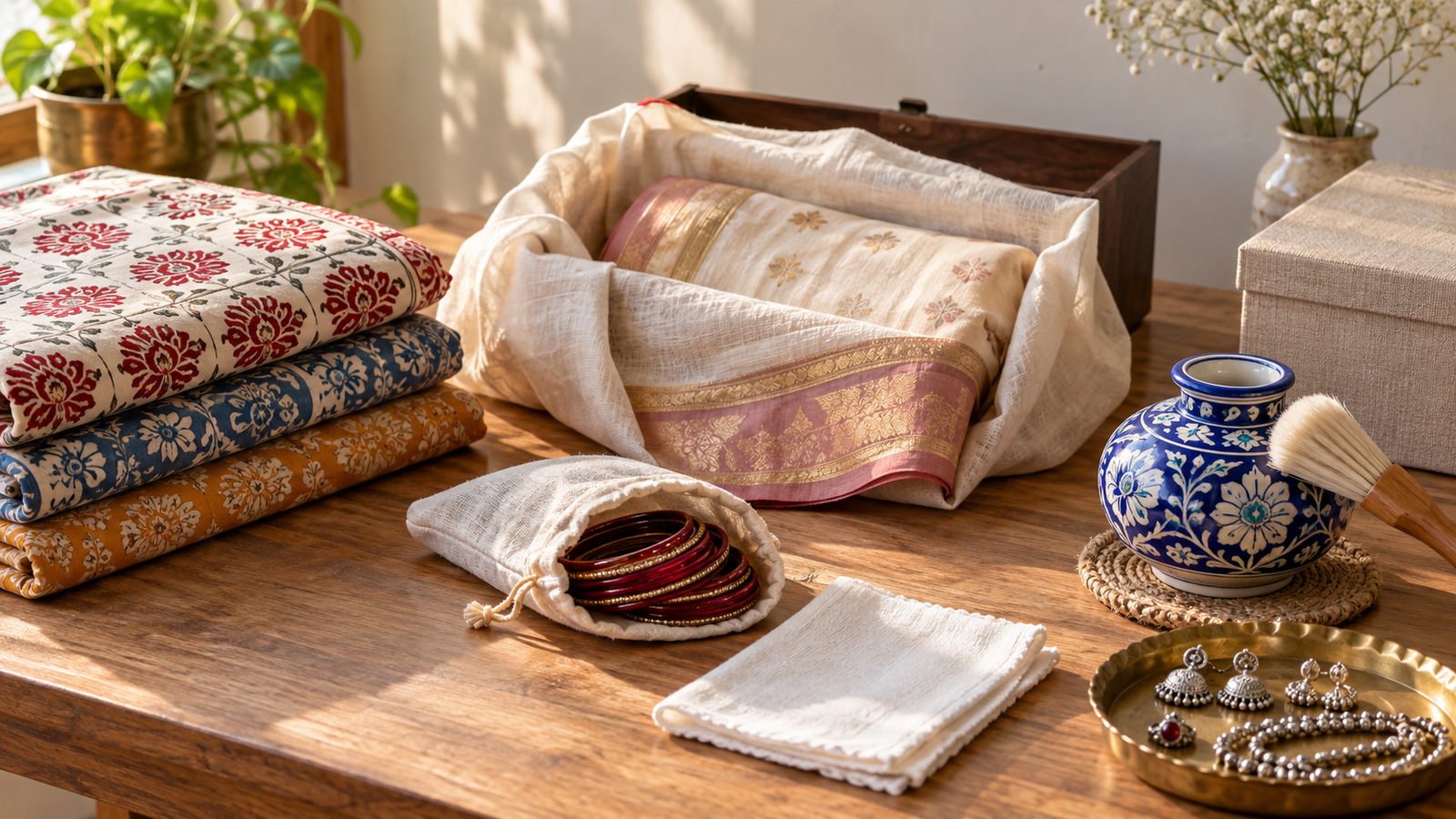
Handcrafted pieces reward gentle care. A printed bedsheet, delicate saree, lac bangle or painted décor object is shaped by material, colour and process, so a single cleaning method cannot suit them all. The safest approach is to handle each piece according to its material and to prevent damage before it begins.
This guide covers practical habits for washing, wearing, storing and displaying handcrafted textiles, jewellery and home décor. Product-specific instructions should always come first, especially when an item contains mixed materials or delicate embellishment.
- Read the care instructions before first use.
- Test any cleaning method on a hidden area.
- Avoid harsh chemicals, prolonged moisture and strong direct sun.
- Store only when the item is clean and completely dry.
- Handle embellishments and painted surfaces without friction.
Caring for Hand Block Printed Cotton
Wash block printed cotton separately for the first few washes, as some colour release can occur. Use cold or gentle water with a mild detergent. Avoid bleach and strong stain removers unless the product instructions specifically permit them. A gentle hand wash or delicate machine cycle can reduce abrasion.
Do not leave the fabric soaking for long periods. Dry it in shade and remove it promptly once dry. Prolonged harsh sunlight can gradually fade many coloured textiles. Iron on the reverse at a temperature appropriate for cotton, especially if the print has metallic detail.
Bedsheets, Cushion Covers and Table Linen
Shake out loose dust before washing and close any zips to prevent snagging. Wash similar colours together and avoid overloading the machine, which increases friction and prevents proper rinsing. Treat spills quickly by blotting rather than rubbing.
Rotate frequently used bedding and cushions so wear remains even. Fold clean textiles loosely and keep them in a dry cabinet. Breathable cotton storage bags are preferable for long-term storage; avoid trapping even slight dampness, which can cause odour or mildew.
Caring for Sarees and Fine Fabrics
Fine weaves, zari, layered dyes and embellished sarees may need professional dry cleaning. Follow the specific care guidance that accompanies the saree. When storing, use a clean breathable cotton or muslin wrap. Refold the saree from time to time so stress does not remain along the same crease.
Do not spray perfume directly onto fabric. Allow the saree to air briefly after wearing before returning it to storage. Keep it away from damp walls and strong light. Avoid hanging heavy sarees for very long periods, as sustained weight may strain the fabric.
Bandhani and Leheriya
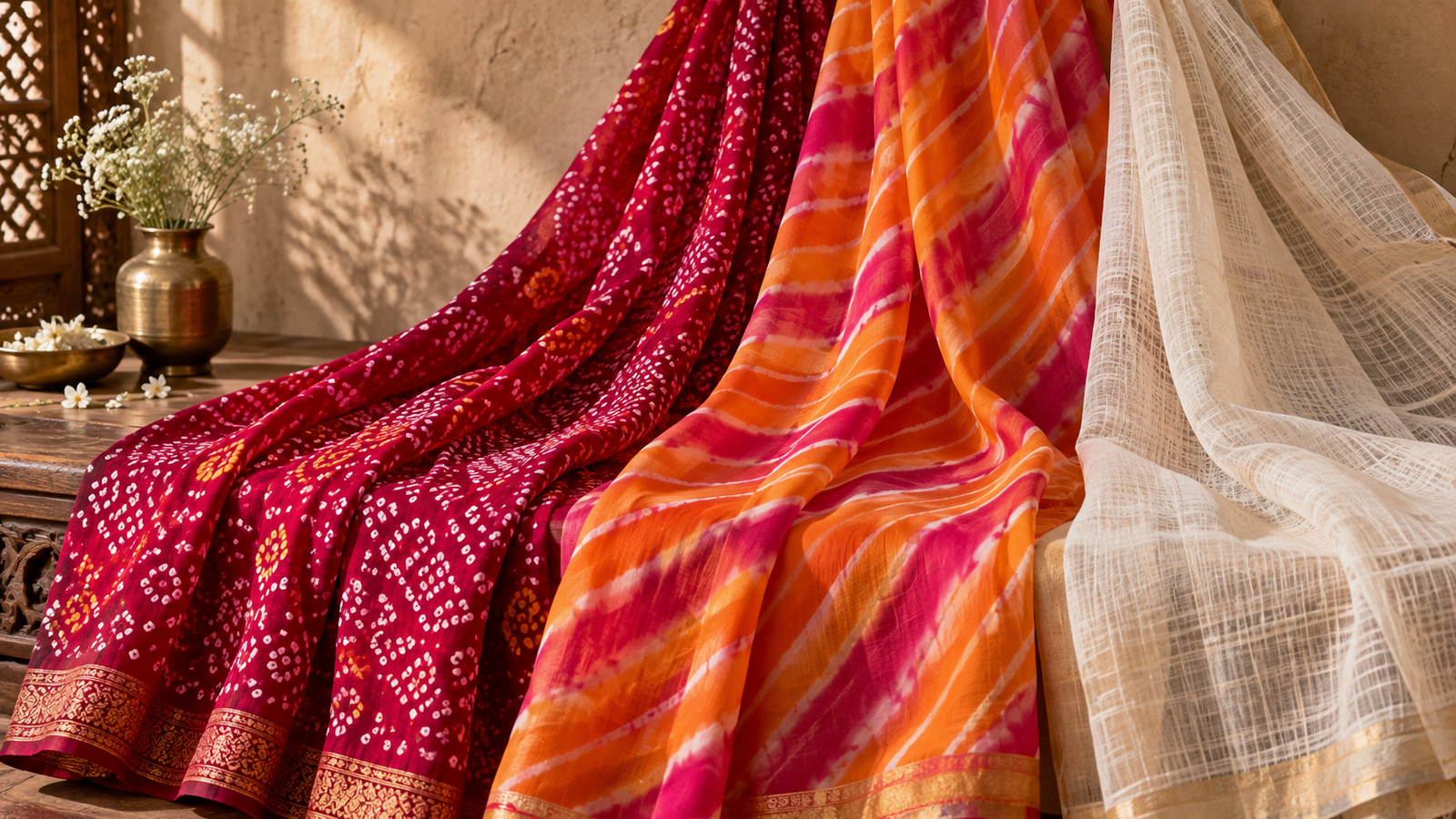
Bandhani may retain a raised texture from its tied points. Pressing it flat too aggressively can reduce this character. Leheriya and other dyed textiles also benefit from gentle washing and shade drying. If the fabric is richly coloured, embellished or especially fine, professional care may be the safer option.
Never assume colourfastness from appearance alone. Test a hidden edge with a clean damp white cloth before any home treatment.
Lac Bangles and Jewellery
Lac responds to heat, pressure and chemicals. Keep lac bangles away from direct heat, hot water and prolonged sunlight. Apply perfume, lotion and hairspray before wearing jewellery and let the skin dry first. After use, wipe the piece gently with a soft dry cloth.
Store bangles in a rigid box so they are not crushed. Separate stone-studded or textured pieces with soft fabric to prevent scratching. Do not force a bangle over the hand; choose the correct size and use a smooth, careful movement.
Stone, Beaded and Metal-Finish Jewellery
Moisture, sweat and cosmetics can dull many finishes. Wipe jewellery after wearing and store pieces separately to reduce tangling and abrasion. Use a soft pouch inside a dry box. Avoid household cleaners, toothpaste and rough brushes, which can damage plating, stones, adhesives or delicate surfaces.
If a setting becomes loose, stop wearing the piece until it can be repaired. Continuing to wear it may turn a simple repair into a lost stone or broken component.
Painted Pottery and Decorative Objects
Dust painted décor with a soft dry cloth or a very soft brush for detailed areas. Do not immerse an object unless it is explicitly made and finished for that use. Abrasive pads and strong cleaners can scratch or cloud the surface.
Lift decorative pieces from the base rather than by a narrow rim, handle or projecting detail. Use felt pads beneath objects on polished furniture. Place fragile pieces away from table edges, slamming doors and busy walkways.
Wood, Cane and Mixed-Material Crafts
Dust wood and cane regularly so dirt does not settle into texture. Keep them away from persistent dampness and strong heat. Mixed-material pieces require the care of their most delicate component: if an object combines fabric, mirror, paint and wood, use a dry and controlled cleaning method rather than wetting the whole piece.
Safe Display and Seasonal Rotation
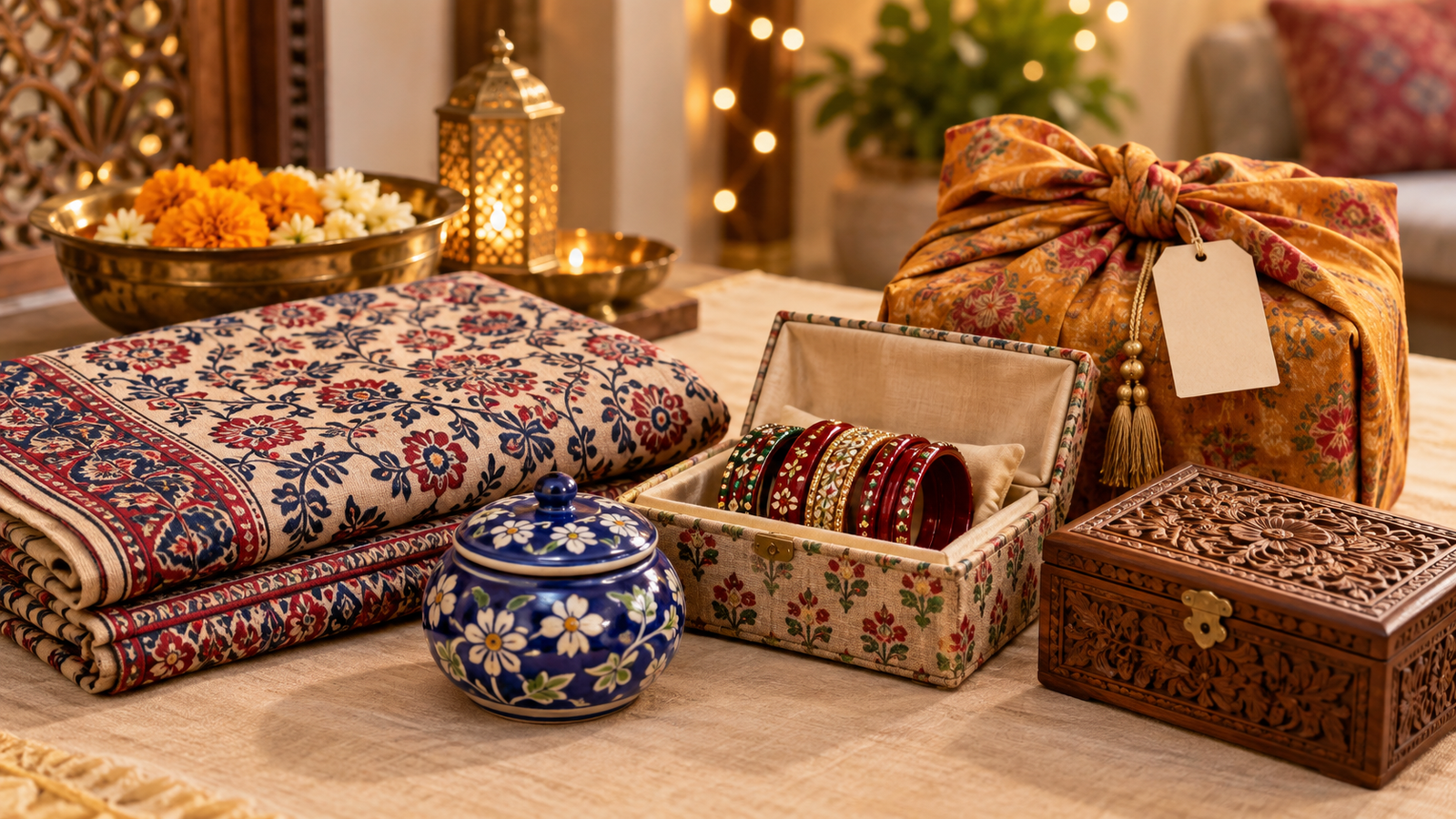
Direct sunlight can affect fabric, painted surfaces and some finishes over time. Use curtains, change the object’s position or rotate displayed pieces periodically. Rotation also refreshes a room and lets stored items rest away from dust and handling.
Before seasonal storage, clean the item, allow it to dry completely and wrap it in a suitable breathable material. Label boxes by category so you do not need to unpack delicate pieces repeatedly.
What to Do When a Spill Happens
Act calmly. Blot liquid with a clean absorbent cloth; do not scrub. Check the care instructions, identify the material and test any treatment in a hidden area. For valuable, delicate or multi-coloured pieces, professional cleaning is often safer than experimenting with strong products.
Preserving the Character of Handwork
Handcrafted does not mean fragile, but it does mean individual. Small variations in print, weave, paint and shape are often part of the process. Good care is not about making a handmade piece look machine-perfect. It is about protecting its colour, structure and usefulness so its unique character can remain part of your wardrobe and home for years.



Leave a comment