
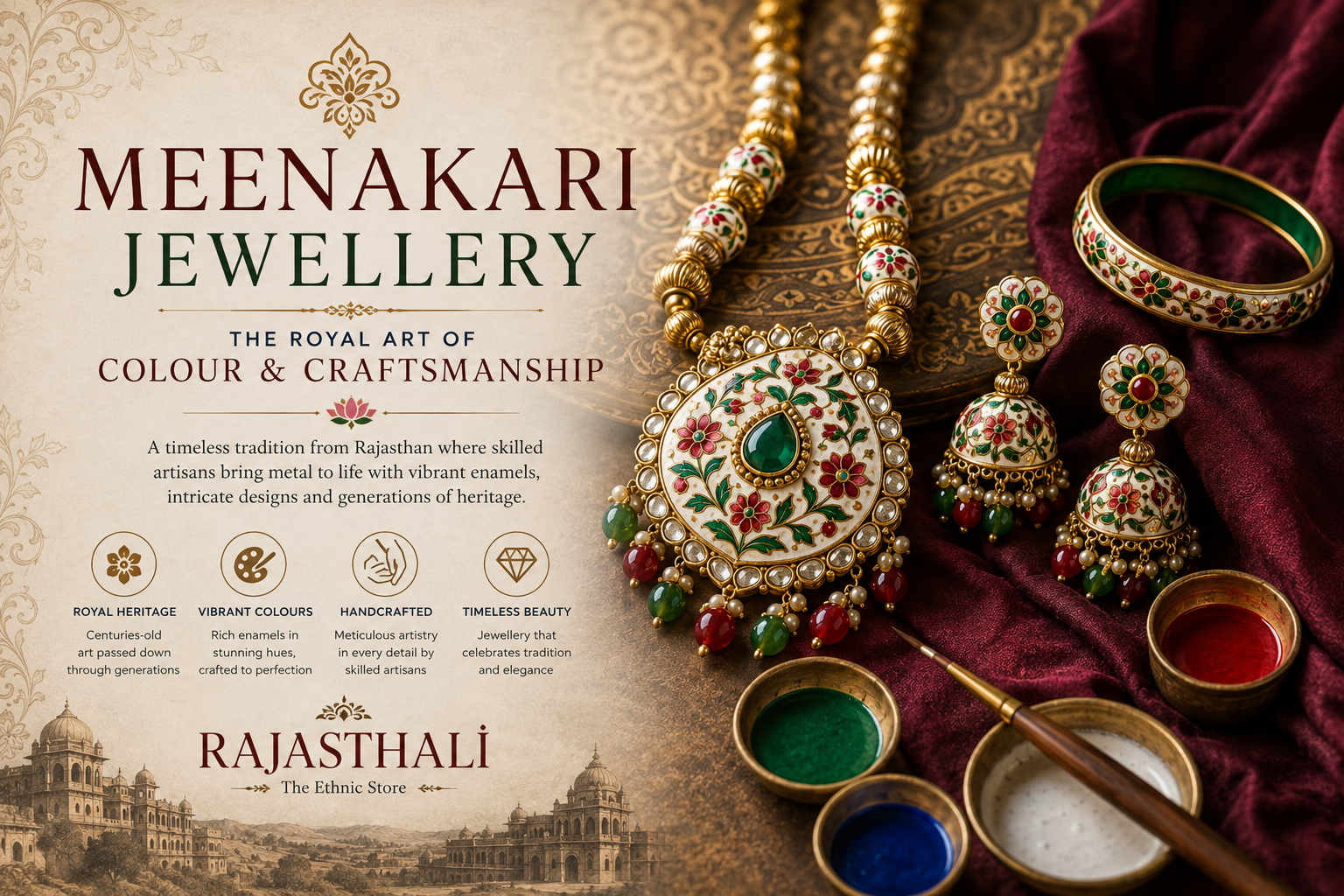
Discover the centuries-old artistry of Rajasthan, where skilled hands transform precious metal and vibrant enamel into timeless jewellery.
Few things capture the royal spirit of Rajasthan quite like Meenakari jewellery. With vivid reds, emerald greens, deep blues and delicate gold or silver surfaces, Meenakari transforms jewellery into miniature works of art.
But behind every colourful ornament is a highly skilled craft involving engraving, enamel application, repeated firing and meticulous polishing.
For generations, this traditional art has been closely associated with Rajasthan, with Jaipur emerging as one of India’s best-known centres for Meenakari jewellery. Rajasthan Tourism also identifies Jaipur particularly with Kundan and Meenakari jewellery.
At Rajasthali, we celebrate these traditional crafts because they represent something much greater than fashion—they are a living part of India’s artistic heritage.
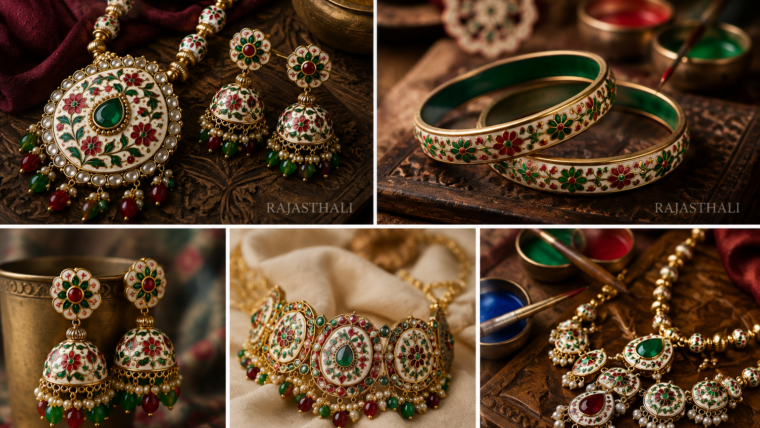
What is Meenakari Jewellery?
Meenakari is the traditional art of decorating a metal surface with colourful enamel.
The word is commonly associated with the craft of filling engraved or recessed areas of jewellery with coloured enamel and then firing it at high temperatures. The heat melts the enamel and creates a smooth, glass-like finish.
Traditional Meenakari designs often feature:
- Flowers and floral vines
- Birds
- Leaves
- Geometric patterns
- Paisley-inspired motifs
- Traditional Rajasthani designs
The result is jewellery that combines metal craftsmanship with vibrant colour.
The Royal Heritage of Meenakari in Rajasthan
Meenakari has a fascinating history in India. In Rajasthan, the craft became particularly associated with the royal courts and the jewellery traditions of Jaipur.
Rajasthan government sources attribute the establishment of Meenakari craftsmanship in Jaipur to Raja Man Singh of Amber, who is described as bringing skilled enamellers from Lahore to the region around the beginning of the 16th century. Jaipur subsequently became a major centre for the craft.
Over time, Jaipur’s artisans developed a distinctive style, with rich colours such as red, green and white becoming particularly characteristic of traditional Jaipur Meenakari.
Today, Jaipur continues to be strongly associated with Meenakari and Kundan jewellery.
What Makes Meenakari Jewellery Special?
The beauty of Meenakari is not simply in its colours.
It is in the precision required to create those colours.
An artisan must carefully prepare the metal, engrave the design, apply enamel into tiny recessed areas and fire the piece repeatedly.
Every stage requires control.
A little too much enamel, an uneven surface or incorrect firing can affect the final result.
That is why traditional Meenakari is considered a highly skilled craft.
How is Meenakari Jewellery Made?
1. Preparing the Metal
The process begins with a piece of metal—traditionally gold or silver, depending on the jewellery and technique.
The metal is shaped into the required form by the goldsmith or jewellery artisan.
The surface is then prepared for engraving.
2. Engraving the Design
The artisan carefully engraves the desired pattern onto the metal.
Fine lines and recessed areas are created to form small compartments that will later hold the enamel.
Traditional designs can include flowers, birds, fish and other decorative motifs.
This stage requires exceptional precision because the engraved grooves determine the final shape of the coloured design.
3. Filling the Enamel
Finely prepared enamel colours are placed into the engraved sections.
Different colours require different levels of heat resistance, so the sequence of application and firing is carefully controlled.
Traditional Meenakari is not simply “painting” colour onto jewellery.
The enamel becomes fused with the metal through controlled heating.
4. Firing in the Furnace
This is one of the most fascinating stages.
The jewellery is placed in a furnace and heated so that the enamel melts and settles into the engraved grooves.
Government handicraft documentation describes enamel firing at approximately 750–850°C, with firing repeated as different colours are applied.
Each colour may therefore require another round of careful firing.
The artisan must judge the process precisely to achieve a smooth and even finish.
5. Cooling and Polishing
After firing, the piece is cooled and cleaned.
The surface is then polished—traditionally with materials such as agate in certain processes—to reveal the brilliance of the enamel and metal.
This final polishing gives Meenakari jewellery its characteristic shine.
The Colours of Meenakari
Colour is the soul of Meenakari.
Traditional Jaipur Meenakari is particularly known for a striking palette of rich colours.
❤️ Ruby Red
One of the most recognisable colours in traditional Jaipur Meenakari, red adds warmth and a regal character to jewellery.
💚 Emerald Green
Green brings a natural, jewel-like quality and is frequently paired with red and white.
💙 Royal Blue
Deep blue creates dramatic contrast and gives contemporary Meenakari pieces a sophisticated appearance.
🤍 White
White helps define motifs and creates balance between stronger colours.
✨ Gold
Gold provides a warm foundation that enhances the brilliance of the enamel colours.
Together, these colours create the unmistakable visual richness of Meenakari.
Meenakari and Kundan Jewellery
Meenakari is often seen alongside Kundan jewellery, particularly in traditional Rajasthani jewellery.
The two crafts are different but can work beautifully together.
Kundan focuses on the intricate setting of gemstones, while Meenakari adds vibrant enamel decoration to the jewellery.
In traditional pieces, different specialists may contribute to a single ornament—including the goldsmith, engraver, enamel artisan and stone setter.
This makes a finished Kundan-Meenakari piece a wonderful example of collaborative Indian craftsmanship.
The Beauty of the Reverse Side
One of the most charming details of traditional Meenakari jewellery is that the enamel work may be especially visible on the reverse side of Kundan jewellery.
Instead of leaving the back plain, artisans can decorate it with colourful enamel.
When the jewellery moves, these colours become visible, adding another layer of beauty.
This is one reason traditional Kundan-Meenakari jewellery can feel almost like a two-sided work of art.
Meenakari Jewellery in Modern Fashion
Meenakari has travelled beautifully from royal traditions into contemporary fashion.
Today, you can find Meenakari craftsmanship in:
- Earrings
- Necklaces
- Pendants
- Bangles
- Rings
- Maang Tikka
- Jhumkas
- Bridal jewellery
- Brooches
- Decorative jewellery pieces
Its colourful appearance makes it suitable for both traditional Indian outfits and contemporary styling.
A pair of Meenakari earrings can transform a simple kurta, while a statement necklace can become the centrepiece of a festive or wedding look.
Why Meenakari Jewellery is Perfect for Festive Wear
Indian celebrations are full of colour—and Meenakari fits naturally into that world.
Its vibrant enamel colours complement:
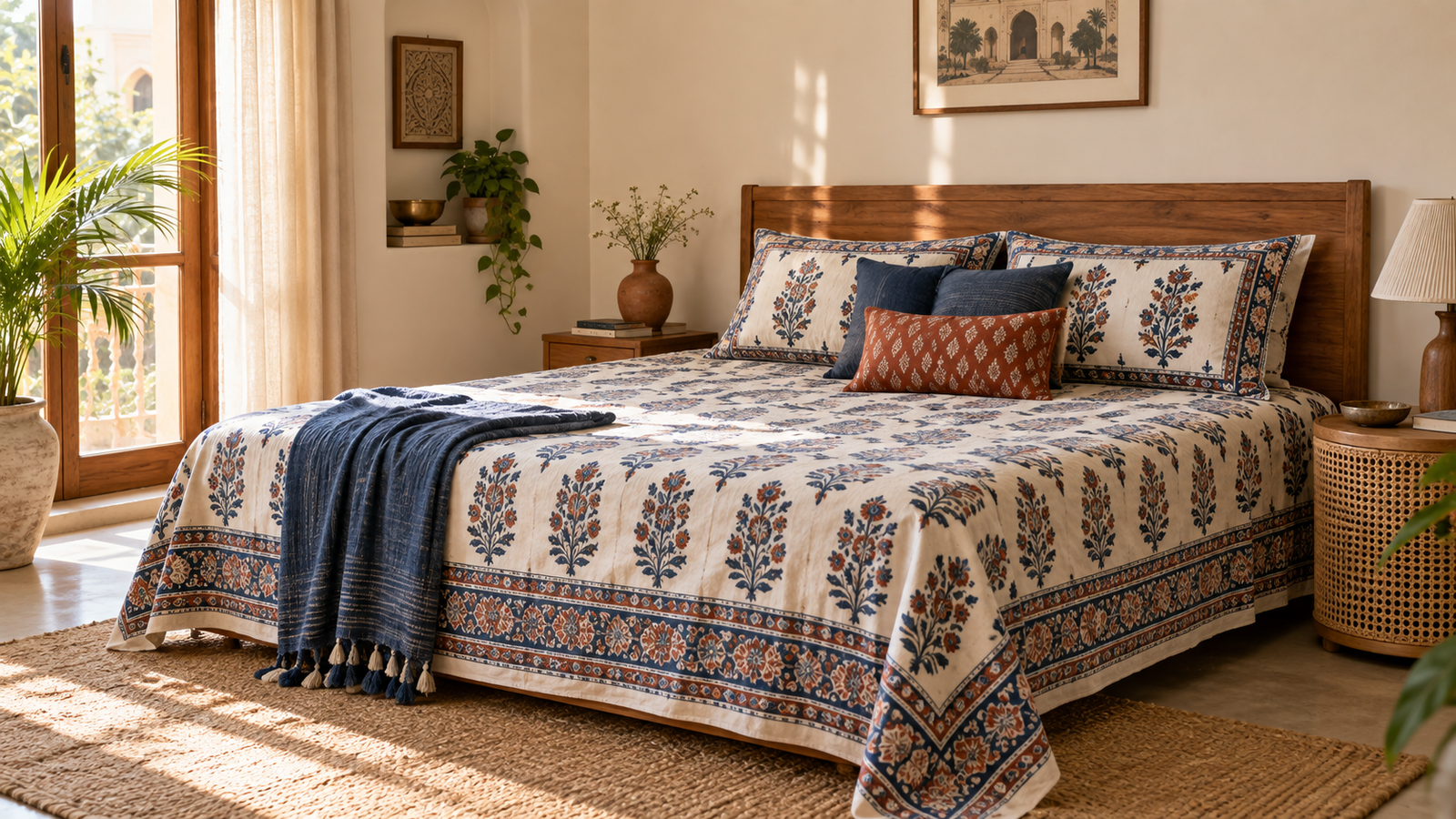
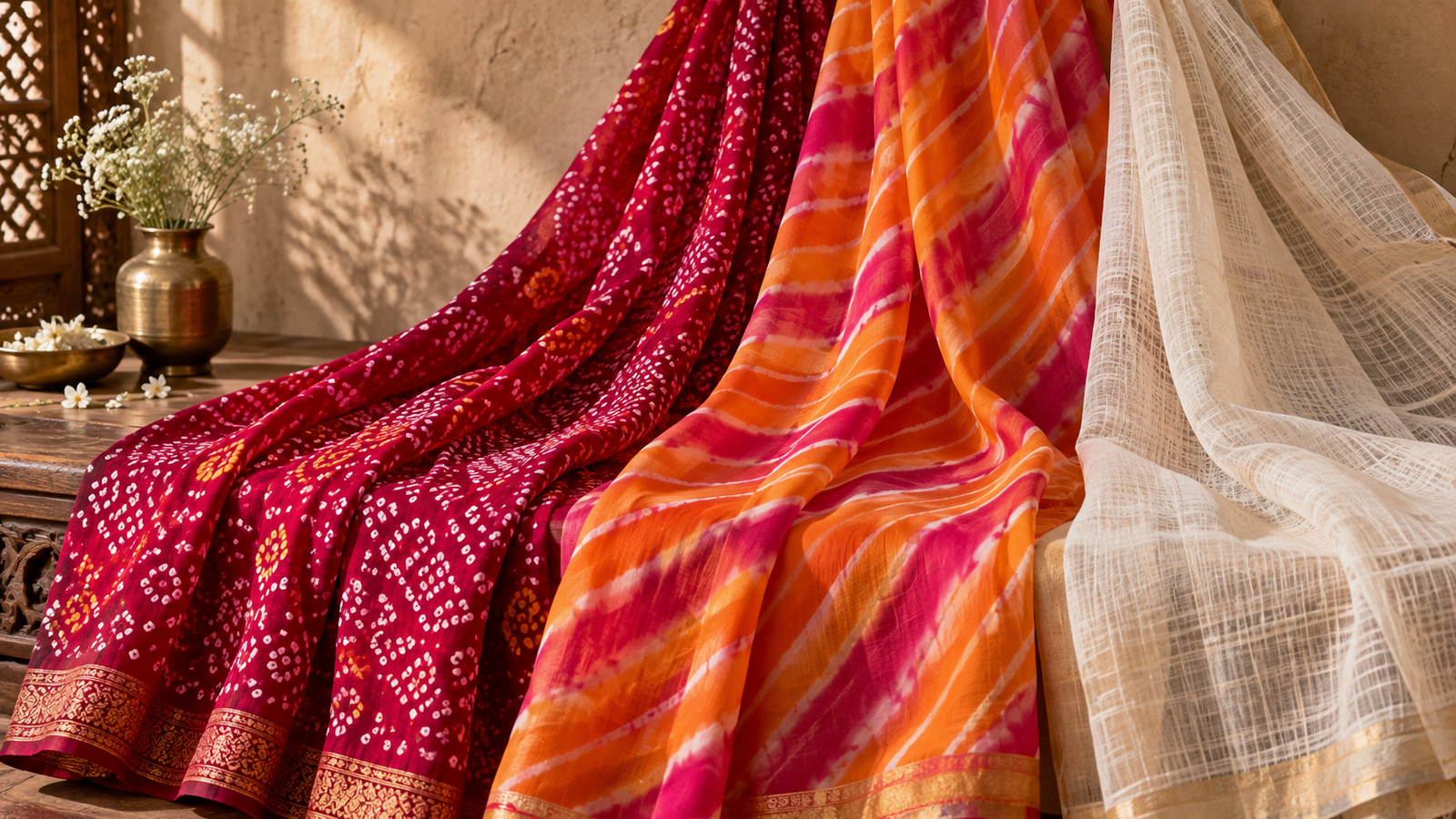
Sarees • Lehengas • Anarkalis • Kurtas • Bandhani • Hand-block Prints
The jewellery can add a royal touch without requiring an elaborate outfit.
For weddings and festive occasions, traditional red-and-green Meenakari creates a particularly classic look.
For everyday styling, smaller earrings, pendants or bangles can bring a subtle handcrafted character to an outfit.
How to Appreciate Handmade Meenakari
When choosing Meenakari jewellery, look closely at the craftsmanship.
Look at the Enamel
The enamel should have a rich, smooth appearance, with colours sitting neatly within the engraved areas.
Examine the Details
Fine motifs and clean engraving reflect the artisan’s skill.
Look at the Finish
Traditional craftsmanship involves multiple stages of firing, cleaning and polishing, so the final surface should have a carefully finished appearance.
Appreciate the Handmade Character
Handcrafted jewellery may have tiny variations that distinguish it from mass-produced pieces.
Those small differences are part of its charm.
Meenakari: More Than Jewellery
A Meenakari ornament is not simply something worn for decoration.
It represents:
Centuries of craftsmanship
Traditional design knowledge
Skilled metalwork
Colour and artistry
Rajasthan’s cultural heritage
Every tiny engraved line and every colourful enamel section reflects the patience of the artisan.
That is what makes traditional jewellery so special—it carries the story of the hands that made it.
Jaipur: The Home of Meenakari Craftsmanship
Jaipur’s relationship with jewellery goes far beyond Meenakari.
The city is internationally recognised for its gemstone and jewellery traditions, and Rajasthan Tourism specifically highlights Jaipur for Kundan and Meenakari jewellery.
The Government of Rajasthan also identifies Meenakari as part of the state’s important traditional art and craft heritage.
For visitors and admirers of Indian craftsmanship, Jaipur offers a fascinating glimpse into the world of traditional jewellery making.
From Royal Courts to Modern Wardrobes
What makes Meenakari truly remarkable is its ability to evolve without losing its identity.
The techniques remain rooted in traditional craftsmanship, while the jewellery itself continues to find new expressions.
A centuries-old craft can now become:
A statement necklace.
A pair of everyday earrings.
A festive bangle.
A bridal heirloom.
Or a treasured gift.
The style changes.
The craftsmanship remains.
Discover the Beauty of Meenakari at Rajasthali
At Rajasthali, we believe traditional Indian jewellery should not simply be preserved—it should be worn, appreciated and passed forward.
Our collection celebrates the colourful artistry of Rajasthan, bringing traditional craftsmanship into contemporary wardrobes.
Whether you are looking for an elegant pair of Meenakari earrings, a colourful necklace or a statement piece for a special occasion, Meenakari adds a distinctive touch of Rajasthan to every look.
Wear the colours of Rajasthan.
Carry its craftsmanship.
Celebrate its heritage.
RAJASTHALI
The Ethnic Store
Dakshinapan Market, Kolkata
Traditional Craft • Timeless Beauty • Indian Heritage
Leave a comment