

Layer block prints, carved wood, warm metal and handmade objects with enough restraint for a comfortable contemporary home.
Build from one anchor
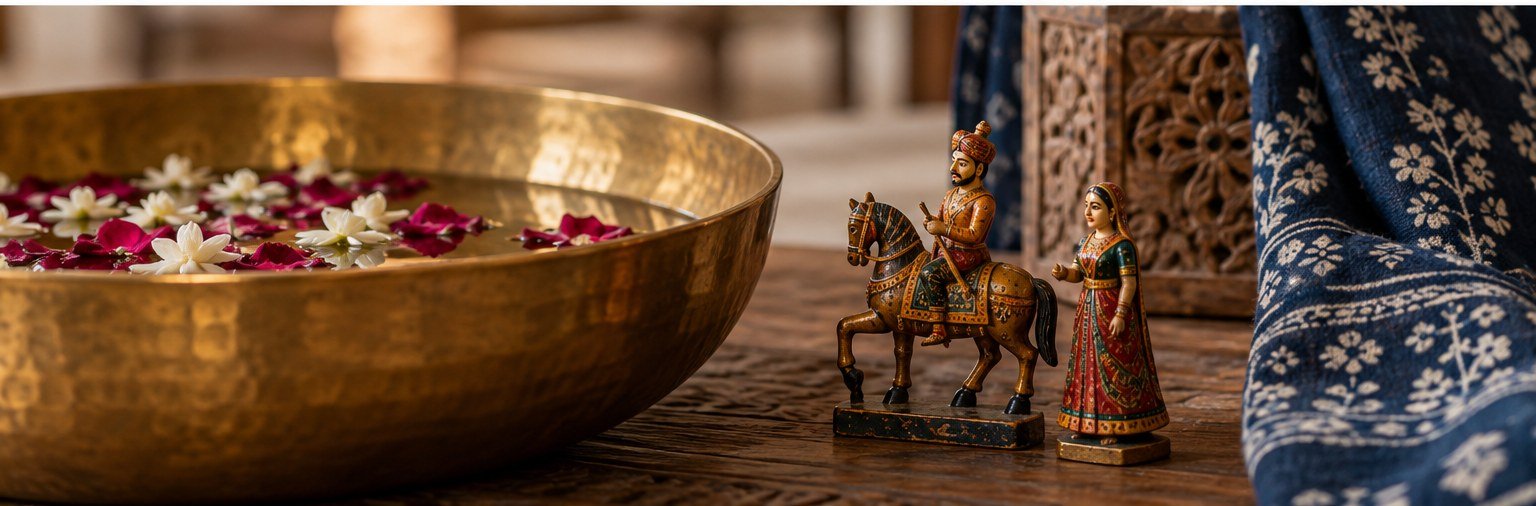
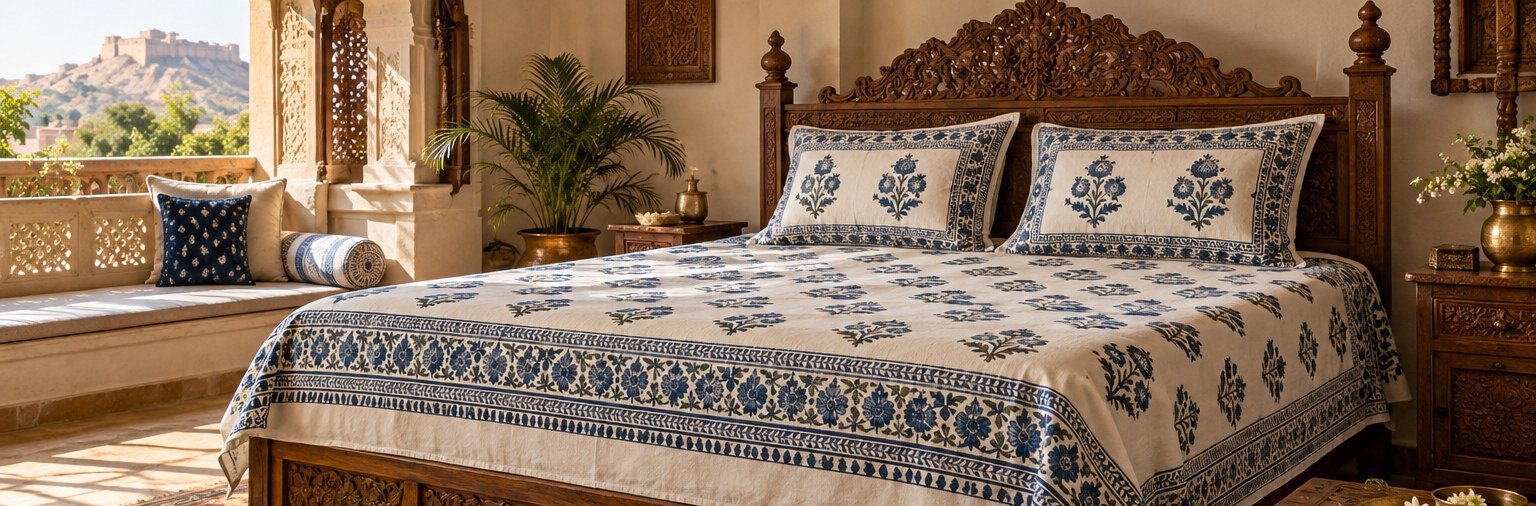
Start with one element that carries the story: an indigo bedsheet, block-print cushions, a carved wooden figure or a warm metal bowl. Let that object set the palette. Adding every motif at once can make a room feel themed; repeating one colour or material creates a more natural connection.
Balance pattern with quiet surfaces
Rajasthan textiles are often rich in repeat and border. Give them plain walls, solid upholstery or unpatterned floor space. Mix print scales deliberately: one large floral, one small geometric and several solids are easier on the eye than three equally busy patterns. Natural cotton, cane and wood soften saturated colour.
Use craft at human scale
Place objects where their details can be appreciated. Small musicians belong near eye level; a bowl needs surface space; a tall darban pair needs room around the silhouette. Grouping by material or colour usually feels calmer than scattering unrelated pieces throughout the room.
Let the room evolve
A collected interior grows slowly. Confirm material, dimensions and current availability, then live with each addition before choosing the next. Rotate textiles seasonally and move smaller objects when the room feels crowded. Respectful styling allows craft to remain visible, useful and connected to everyday life.
A home, not a stage set
Rajasthan-inspired interiors are most convincing when they remain connected to the people living in them. A room does not need arches, saturated walls and carved furniture all at once. One printed textile, one warm metal object or one group of wooden figures can establish a relationship with the region’s design language while leaving space for books, family photographs and ordinary life.
Rhythm through repetition
Good rooms use repetition much like textiles do. A rust accent may appear in a cushion, a small painted detail and the edge of a rug. A carved line may echo in a table and a picture frame. These connections are subtle, but they make unlike objects feel related. Repetition should guide the eye rather than announce a theme.
Rooms that change over time
The most personal interiors are never completely finished. Textiles rotate with weather, brass darkens, wood gains small marks and gifts arrive from different moments. Allowing this change prevents heritage-inspired décor from becoming rigid. Care, repair and rearrangement keep objects active in the home and make the room a record of relationships rather than a display assembled in a single day.
A continuing story
Rajasthan’s craft traditions are best understood as living practices rather than a fixed collection of motifs. Makers, wearers and households continually decide what to preserve, what to adapt and how an object belongs in the present. Looking slowly—at material, process, use and change—creates a richer connection than treating culture as surface decoration.


Leave a comment