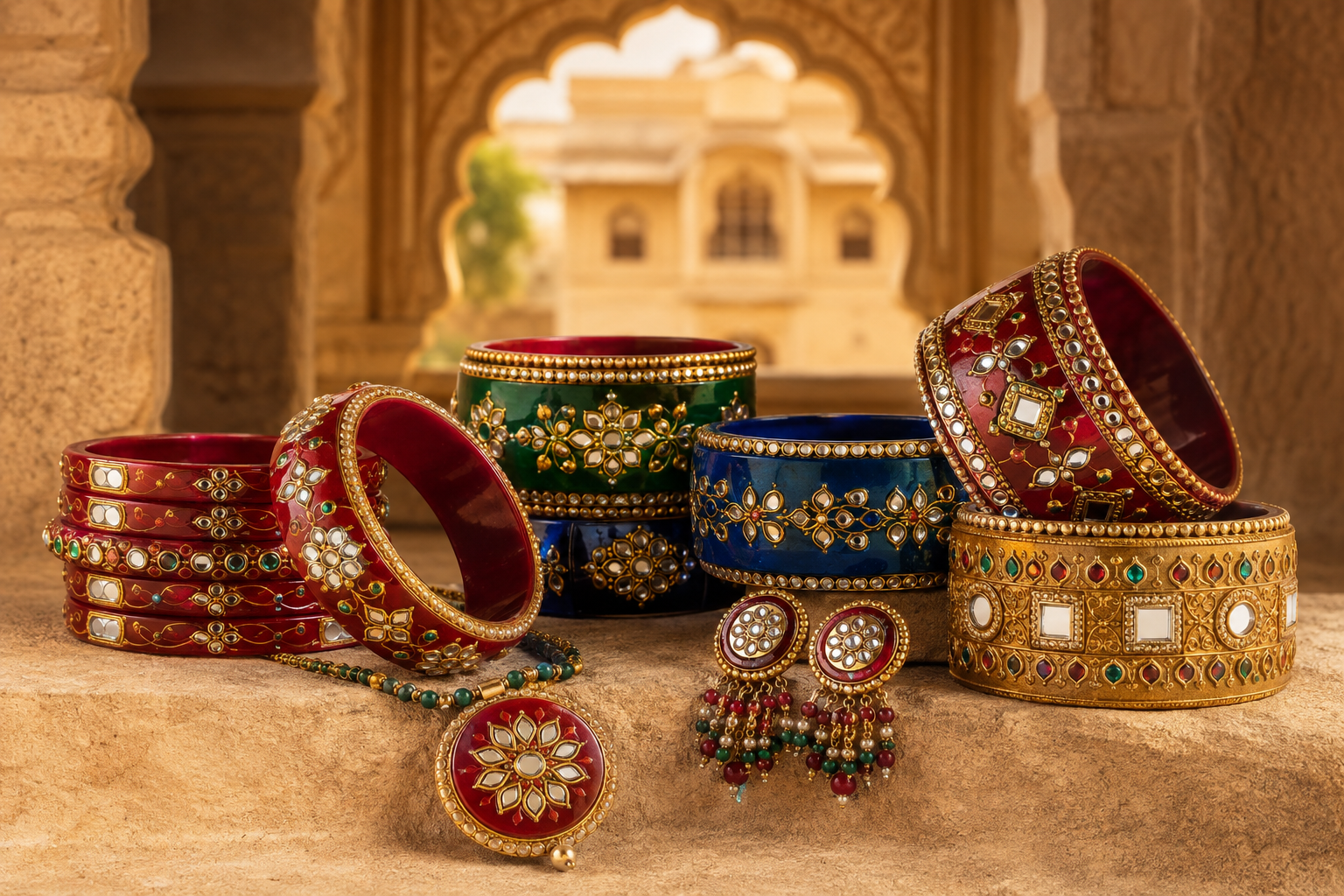
Rajasthani lac jewellery is colour shaped by fire and finished by hand. In Jaipur’s old craft lanes, natural lac is warmed until pliable, rolled into form and transformed with vivid pigments, mirrors, beads and stones. The result can be as slender as a festive bangle or as bold as a sculptural kada—jewellery that carries Rajasthan’s love of colour into everyday life and ceremonial dress.
This guide explores what lac really is, how the craft developed in Rajasthan, how artisans make it, and the principal types of lac jewellery found today. It also explains how to choose and care for handmade pieces without confusing lac work with glass bangles or precious-metal kundan jewellery.
- Material: a natural resin produced by the lac insect, then refined for craft use.
- Rajasthan’s best-known centre: Jaipur, especially its historic craft and market quarters.
- Signature form: colourful lac bangles, from fine everyday sets to broad bridal and stone-studded designs.
- Common decoration: mirrors, glass stones, beads, pearls, metallic wire and floral or geometric motifs.
What Is Lac Jewellery?
Lac—also written as lakh in everyday Indian usage—is a natural resin secreted by the lac insect. Scientific work from the Indian Council of Agricultural Research identifies Kerria lacca as the principal cultivated species. After collection and refinement, the resin can be softened by controlled heat, coloured and shaped. This thermoplastic quality is what makes it so useful for bangles and decorative surfaces. ICAR’s institute profile provides the scientific context, while the Development Commissioner (Handicrafts) documents its use in jewellery.
Finished lac jewellery is prized for saturated colour, a warm handmade surface and remarkable design flexibility. Artisans may leave a piece relatively simple or press heated decorative elements into its surface. Because each stage responds to temperature, pressure and timing, small variations are part of the character of handwork rather than a defect.
A History of Lac Jewellery in Rajasthan
Lac as a material has a much older Indian story than the jewellery form seen in Jaipur today. The Government of India’s handicrafts portal notes references to lac in the Vedas, the Mahabharata and the Shiva Purana; the famous Lakshagriha episode shows that the substance was familiar in early literary tradition. These references establish the antiquity of lac itself, but they do not prove that today’s Rajasthani bangles had exactly the same form or method. See the official overview of lac and wax crafts.
For the recognisable regional jewellery tradition, Rajasthan Tourism places the development of lac or lacquer jewellery in eighteenth-century Rajasthan. Jaipur became its most visible centre. D’Source’s documentation of the craft explains that when Sawai Jai Singh II planned Jaipur, specialist makers were settled in a lane that became known as Maniharon ka Rasta, near the old city’s bazaars. Today, Jaipur’s Tripolia area remains closely associated with lac bangles and jewellery. Rajasthan Tourism and D’Source offer complementary accounts.
The knowledge has traditionally been carried by artisan families, notably the Muslim Manihar and Hindu Lakhera communities. Research documented by D’Source also records lac-bangle practice in Jhunjhunu, Sikar, Alwar, Ajmer and Jodhpur, while identifying Jaipur as a major hub. Workshop roles and techniques differ from family to family, so lac jewellery is best understood as a living tradition—not a frozen museum recipe. Read the artisan and regional documentation.
Why Lac Bangles Matter in Rajasthani Culture
Bangles are more than decoration in many Indian communities. They can mark celebration, marriage, family custom and personal style. India’s Ministry of Tourism describes Jaipur’s lac bangles as symbols associated with grace and prosperity, commonly worn for weddings, festivals and cherished occasions. Red, green, blue, yellow and pink are frequently enriched with glass beads, stones and small mirrors. Incredible India’s Jaipur craft guide records this continuing cultural presence.
Meanings are not identical everywhere. A colour or bangle combination may carry one association in a particular family and a different one elsewhere. That variety is one reason a handmade set often feels personal: it can be selected for a ceremony, coordinated with a lehenga or saree, or worn simply because its colour brings joy.
How Rajasthani Lac Jewellery Is Made
The exact recipe belongs to each workshop, but the central sequence is well documented:
- Preparing and colouring: refined lac is warmed until soft. Colour is blended or layered into the workable material.
- Rolling and pressing: the softened lac is worked on a heated metal surface with a flat wooden tool, often called a hatta, until it reaches the needed thickness.
- Forming: a strip or coil is wrapped around a core or shaped on a mould. Its ends are reheated and joined.
- Sizing and polishing: the bangle is adjusted on a tapered wooden mandrel and polished to develop its smooth sheen.
- Embellishing: mirrors, glass stones, beads or metallic elements are warmed and pressed into the lac so they hold as the surface cools.
The process depends on judgement: too little heat and the material will not shape cleanly; too much can affect colour and structure. The NID-authored D’Source process study and the official stone-studded bangle profile show how hand tools, heat and precise finishing work together.
Types of Rajasthani Lac Jewellery
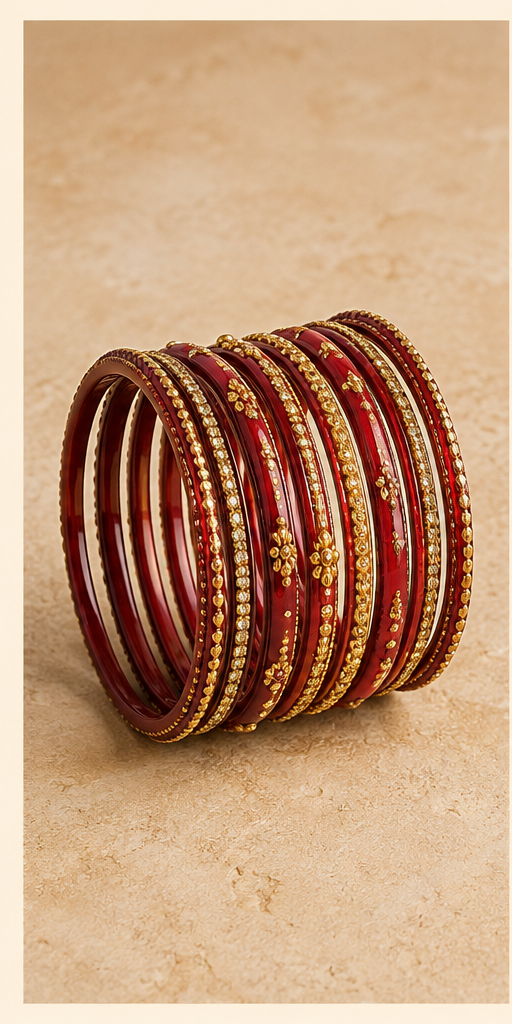
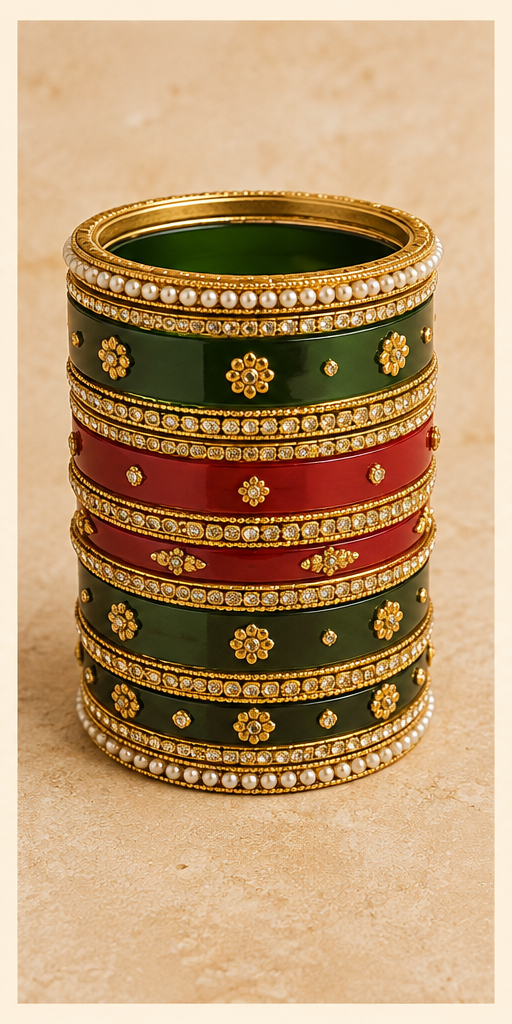
1. Traditional Lac Bangles and Bridal Chooda
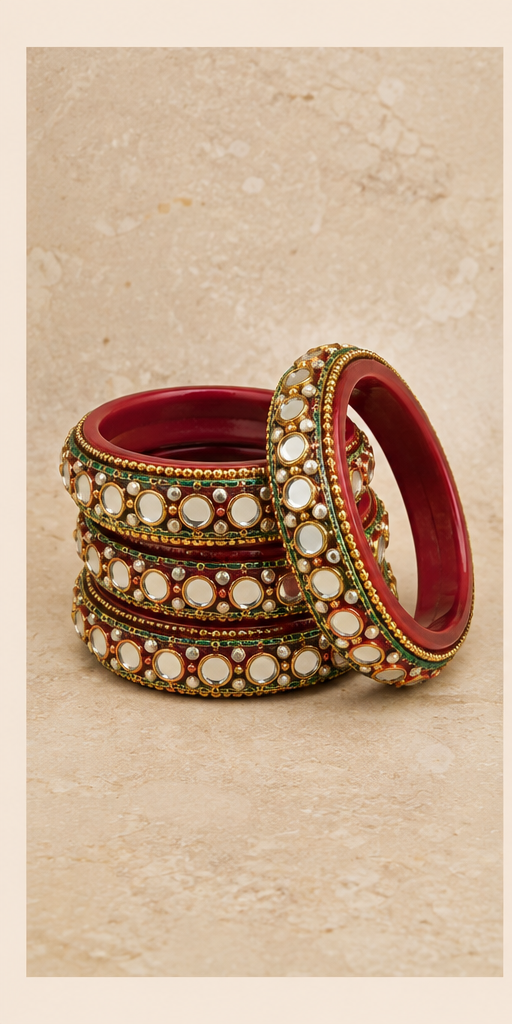
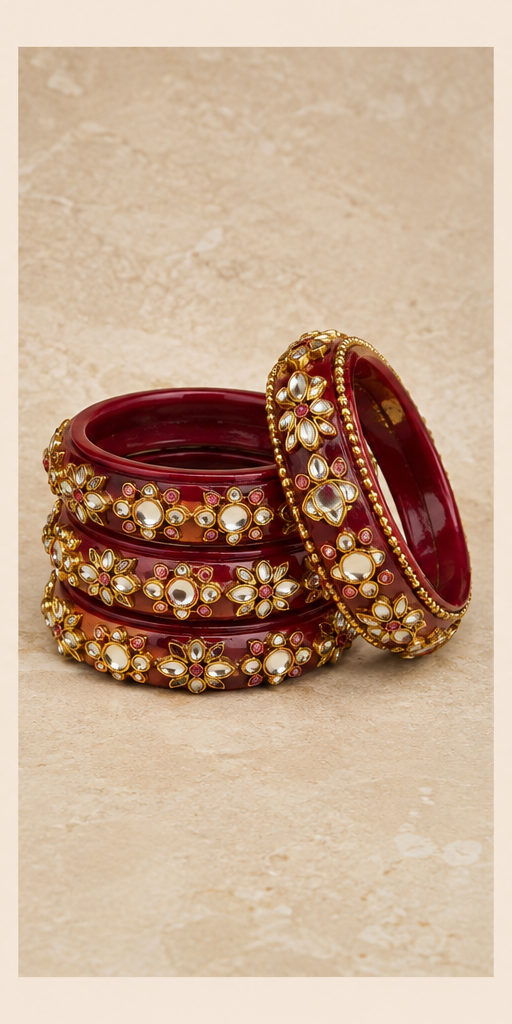
The slender bangle is the craft’s defining form. Plain colour, fine metallic edging, dotted motifs and delicate stone lines make these pieces easy to stack. Bridal chooda arrangements are broader visual compositions: coordinated bangles in auspicious or outfit-led colours, often balanced with statement pieces. Red and green remain enduring choices, but contemporary sets can range from restrained ivory and gold to full rainbow palettes.
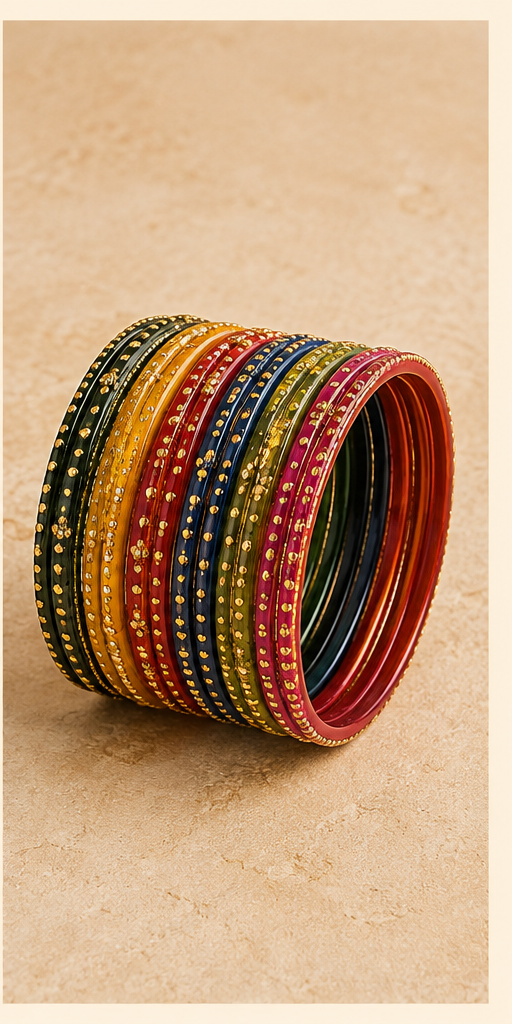
2. Broad Lac Kadas
A kada is wider and more sculptural than a fine bangle. The larger surface gives artisans space for floral vines, geometric borders, mirror petals and contrasting bands. One kada can act as the centrepiece of a stack, or a matched pair can frame finer bangles. Because width and inner diameter both affect comfort, check the exact measurements rather than relying only on a general small, medium or large label.
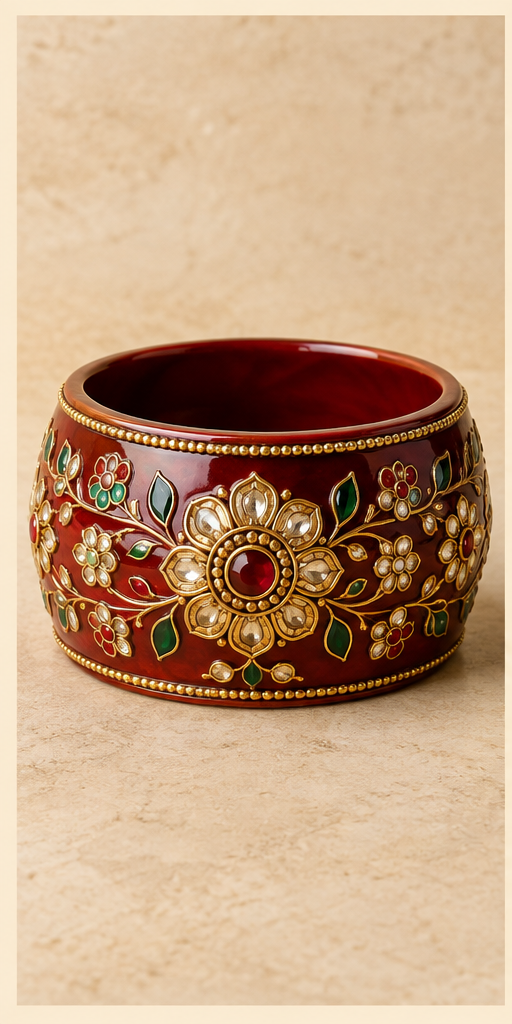
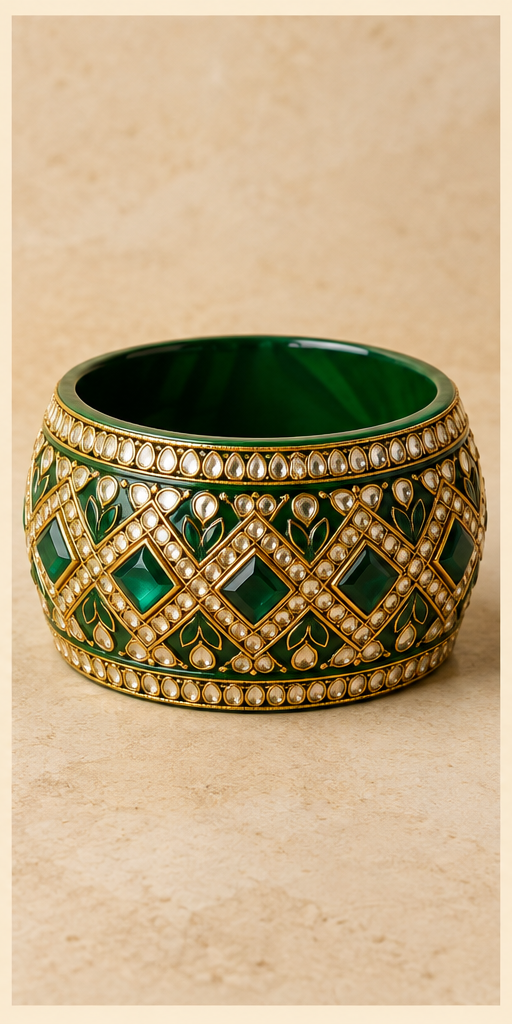
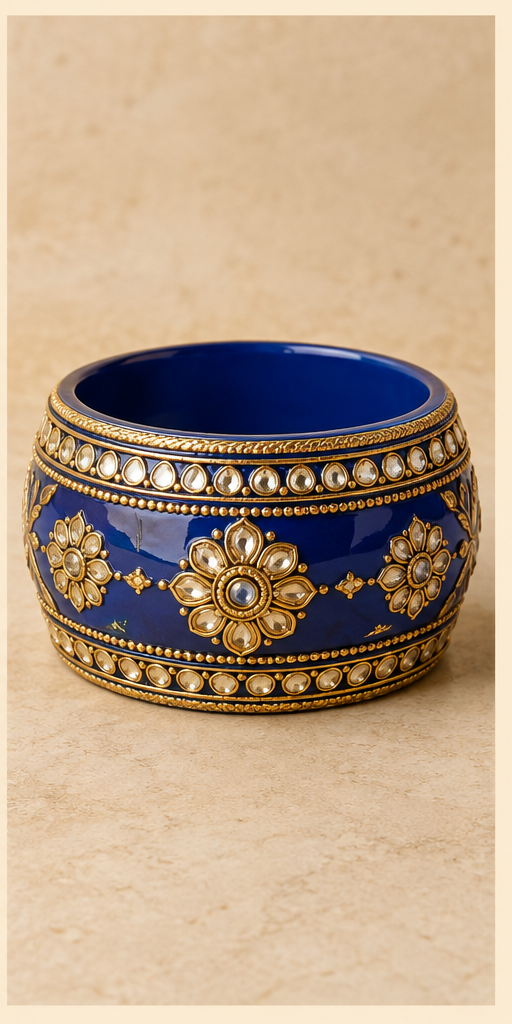
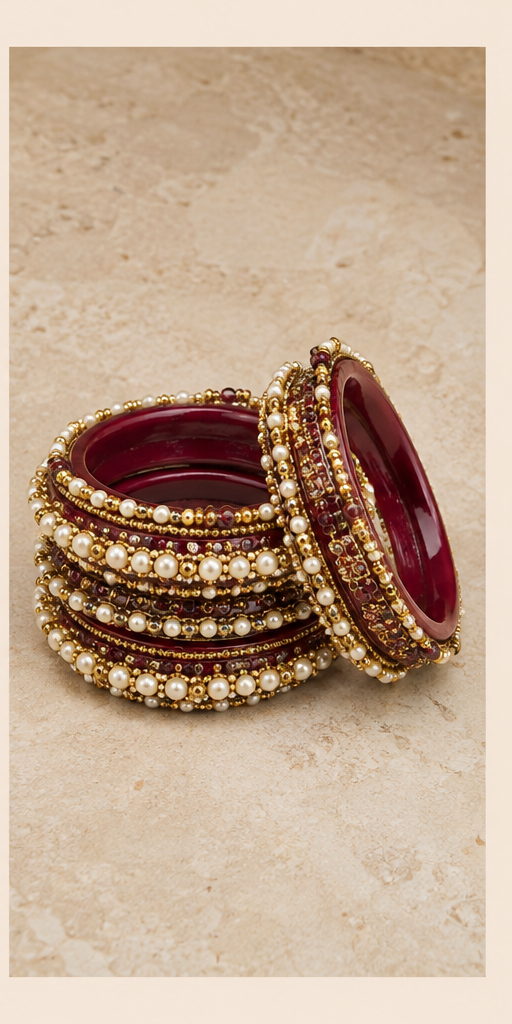
3. Mirror, Stone and Bead-Embellished Lac Bangles
Embellishment changes the mood of lac work. Tiny mirrors create movement in festive light; glass or semi-precious stones give a jewel-like rhythm; pearls and beads soften the surface. You may see “kundan-style” used for stone-studded lac bangles. Here it describes the visual effect of closely set stones—it should not be confused with traditional precious-metal kundan jewellery, whose materials and setting method are different. For more on that distinction, explore our guide to Meenakari jewellery and our introduction to Rajasthani stone jewellery.
4. Contemporary Lac Necklaces, Earrings, Rings and Hair Ornaments
Bangles are the historic heart of the practice, but today’s makers also adapt lac surfaces to pendants, necklaces, earrings, rings, maang tikka and other ornaments. These forms let a wearer repeat the same colour and motif across a coordinated set. They are best described as contemporary extensions of lac craft: the material vocabulary is traditional, while the product range responds to changing fashion and gifting needs.
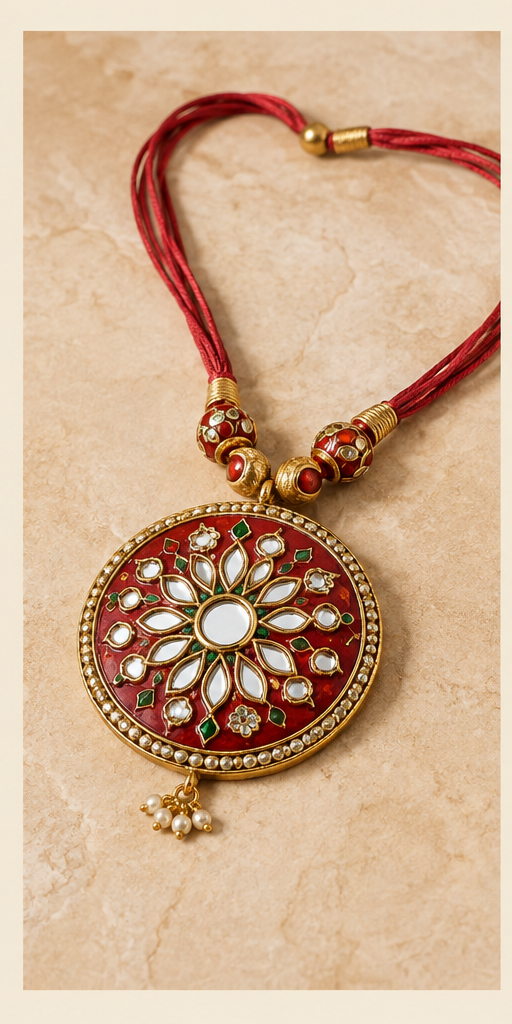
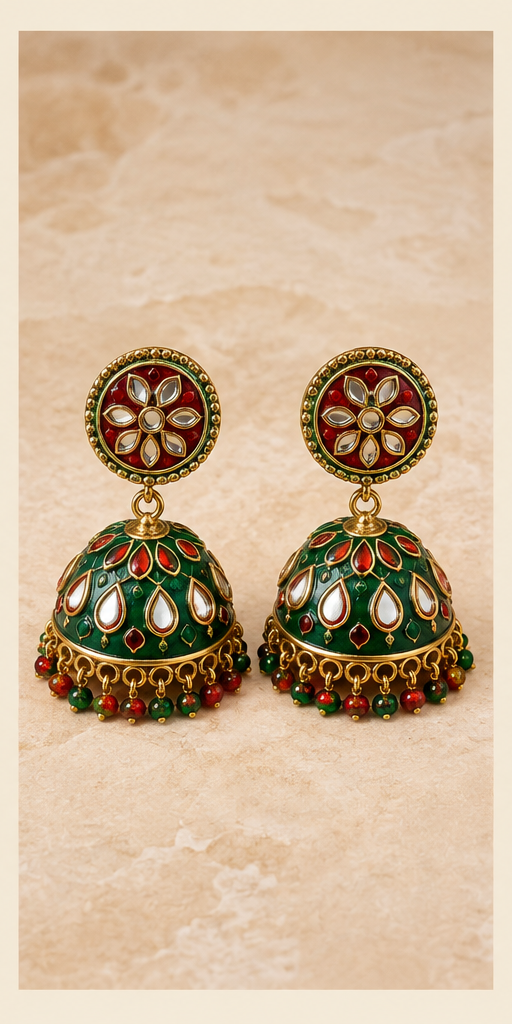
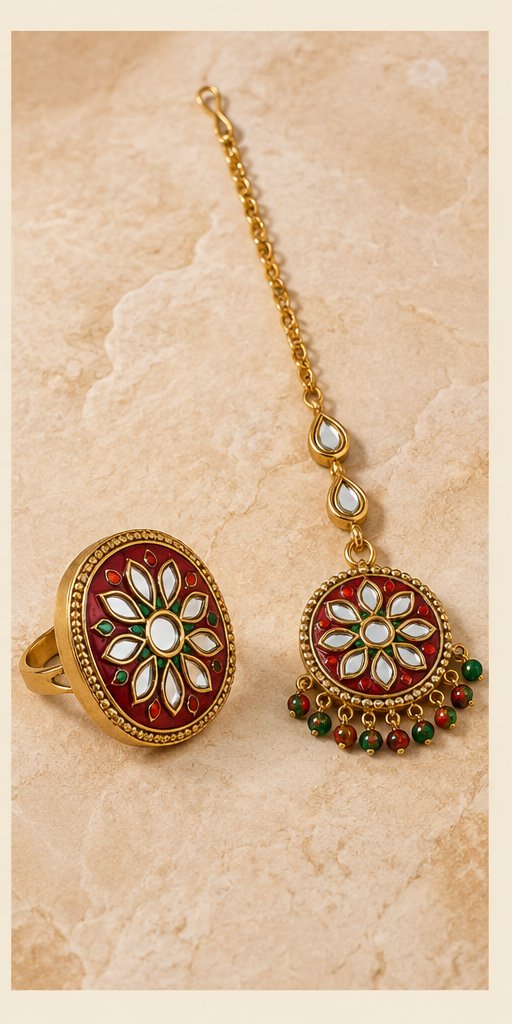
Gallery note: these original editorial images were created for Rajasthali Store to illustrate jewellery categories; individual designs shown are not a promise of current stock.
How to Identify Thoughtful Handcrafted Lac Work
- Look at the surface: a hand-finished piece may show slight variation, but the lac should feel evenly shaped rather than carelessly lumpy.
- Check the join: on a bangle, the joined area should be firm and smoothly finished.
- Inspect embellishments: stones and mirrors should follow the intended pattern and sit securely.
- Confirm sizing: compare inner diameter with a bangle that already fits. Broad kadas can feel tighter than slim bangles of the same nominal size.
- Ask what is handmade: lac, base materials and decoration methods vary. A transparent description is more useful than vague claims of “royal” or “antique.”
How to Style Lac Jewellery
For a wedding or festival, build a stack around one colour from your outfit, then add a contrasting kada or mirror-work bangle. With a printed saree, let one broad kada echo a smaller motif instead of matching every colour. For contemporary dressing, a single pair of lac earrings or a pendant can add Rajasthan’s saturated palette to a plain kurta, linen dress or neutral co-ord.
The most elegant combinations leave breathing room. If the necklace is large, choose smaller earrings; if the bangles are heavily embellished, keep rings minimal. Mixing lac with metal bangles can create texture, but separate rough-edged pieces so they do not scrape the lacquered surface.
How to Care for Lac Jewellery
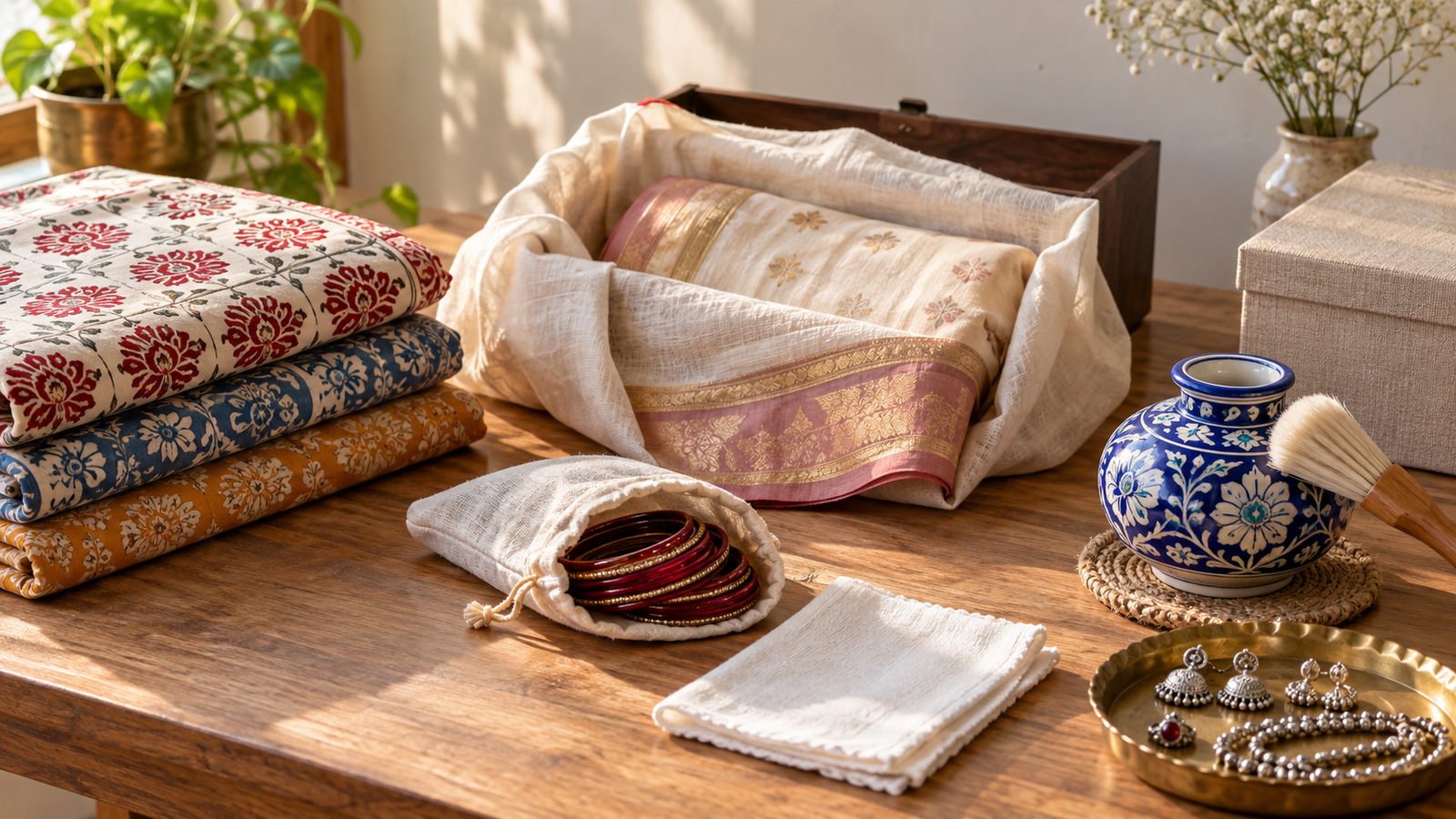
Lac responds to heat, so storage matters. Keep pieces away from direct sunlight, hot cars, heaters and prolonged high temperatures. Avoid soaking them in water, perfume, hairspray, sanitiser or household cleaners. Put jewellery on after cosmetics have dried, and wipe it gently with a soft, dry cloth after wear.
Store each piece in a soft pouch or a compartmented box so stones do not rub against neighbouring jewellery. Do not force a bangle over the hand: use the correct size, and ask an experienced craftsperson about repair if a piece loosens or cracks. Home heating can permanently distort the form or damage decoration.
A Living Jaipur Craft
Rajasthani lac jewellery connects a natural material, inherited skill and an ever-changing sense of style. Its ancient material history gives it depth; Jaipur’s artisan neighbourhoods give it place; and the hands that heat, roll, join and decorate every piece give it individuality. Whether chosen as a bridal stack, a festival kada or a bright contemporary earring, lac jewellery remains one of Rajasthan’s most recognisable ways of wearing colour.
Explore more stories from the region in the Rajasthali Store journal, or browse our jewellery collection for currently available designs.
Sources and Further Reading
- Office of the Development Commissioner (Handicrafts): Lac and Wax Crafts
- Indian Council of Agricultural Research: Institute Profile for Natural Resins and Gums
- D’Source/NID Bengaluru: Lac Bangles—Introduction
- D’Source/NID Bengaluru: Lac Bangles—Making Process
- D’Source/NID Bengaluru: Lacquer Work—People and Place
- Incredible India, Ministry of Tourism: Jaipur—A City of Creativity and Tradition
Leave a comment