
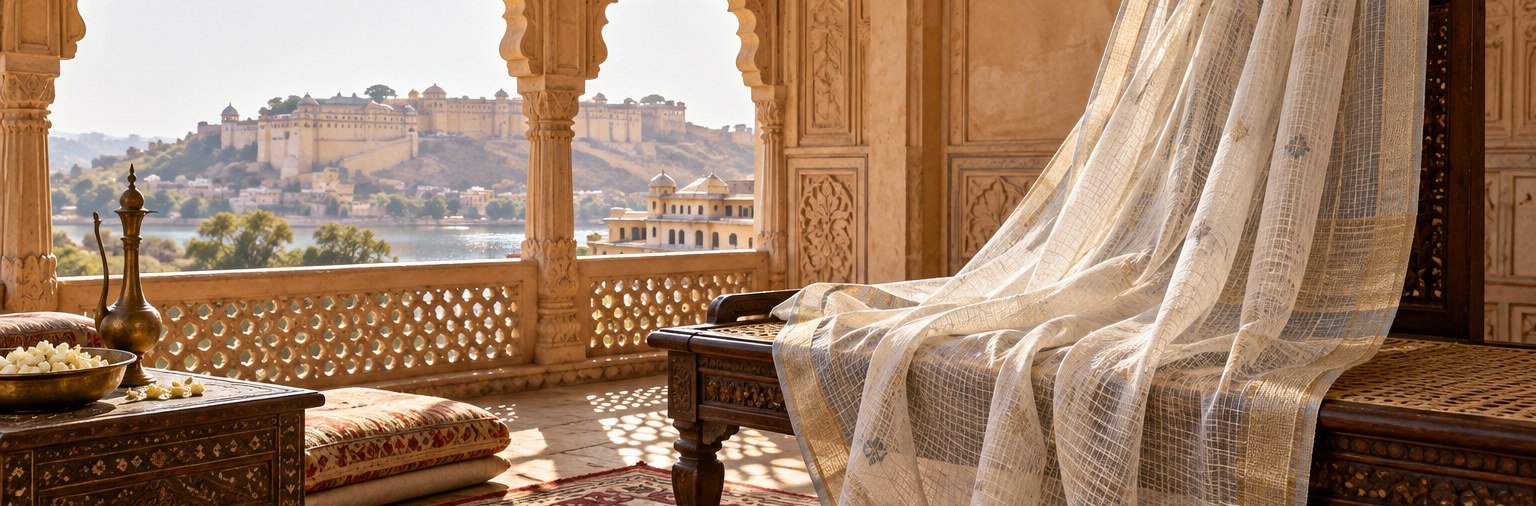
An introduction to the lightweight square-check character of Kota Doria and what to consider when selecting an airy saree.
The visual signature
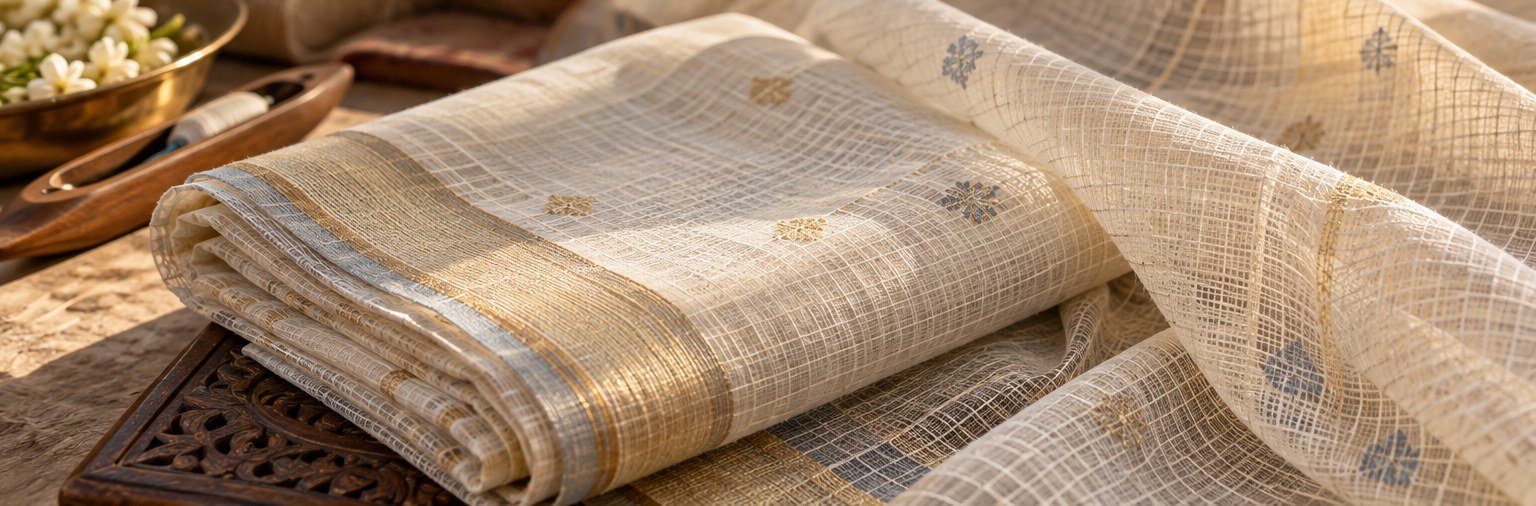
Kota Doria is celebrated for an airy structure marked by fine square checks often described as khat. The cloth can appear delicate while still holding a clear grid. Light passes through the weave, giving a saree or dupatta an elegant weightlessness that is especially appealing in warm weather and for layered occasion dressing.
Cotton and silk directions
Different fibre combinations change the textile’s sheen, fall and care. Cotton-forward cloth tends to feel crisp and breathable; silk-cotton directions can add luminosity and a softer drape. Borders, woven butis and understated metallic details may shift the piece from everyday wear toward celebration. Always verify fibre composition rather than inferring it from shine alone.
What to inspect
Look at the regularity of the square structure, the finishing of the edges and the relationship between body, border and pallu. Ask for the full length and width, blouse-piece information, weight and a photograph in natural light. Transparency is part of the textile’s character, so consider the blouse and petticoat colours as part of the complete styling decision.
Care and storage
Fine open weaves need considerate handling. Avoid catching jewellery on the cloth, fold along changing lines to reduce repeated stress, and keep heavy embellishments from pressing into the fabric during storage. Follow the confirmed care label; dry cleaning may be appropriate for silk blends or metallic borders, while some cotton pieces may permit careful washing.
Lightness as structure
The first impression of Kota Doria is often delicacy, yet its lightness is not an absence of structure. The checked field gives the cloth an organised geometry. Fine yarns and open areas work together so that air and light become part of the textile. This is why the weave can look different against skin, a contrasting blouse or open daylight. Transparency is not merely a practical consideration; it is one of the design materials.
The intelligence of a quiet textile
Some textiles announce themselves through saturated colour or dense ornament. Kota Doria can work more quietly. A narrow border, small buti or subtle shift in fibre may be enough to organise the whole saree. Such restraint rewards close attention. The grid becomes visible, disappears and returns as the cloth folds. What seems simple from a distance reveals a finely balanced surface nearby.
Wearing and preserving airiness
An open weave asks for a different relationship with the wearer. Jewellery, pins and rough surfaces can catch; heavy storage can flatten the character of the cloth. At the same time, the textile should not be treated as too precious for use. Its grace becomes most apparent in drape. Good stewardship means handling it with awareness, changing fold lines during storage and allowing the fabric to remain part of living dress rather than only an object in a cupboard.
A continuing story
Rajasthan’s craft traditions are best understood as living practices rather than a fixed collection of motifs. Makers, wearers and households continually decide what to preserve, what to adapt and how an object belongs in the present. Looking slowly—at material, process, use and change—creates a richer connection than treating culture as surface decoration.


Leave a comment