

Understand the practical differences between quilted razai, lightweight dohar and AC blanket directions for different seasons.
Three different comfort roles
A razai is associated with loft and warmth, a dohar with breathable layered comfort, and an AC blanket with a lighter layer suited to cooled rooms. Names can be used loosely in retail, so choose by construction, fill, weight and intended temperature rather than title alone.
Ask about construction
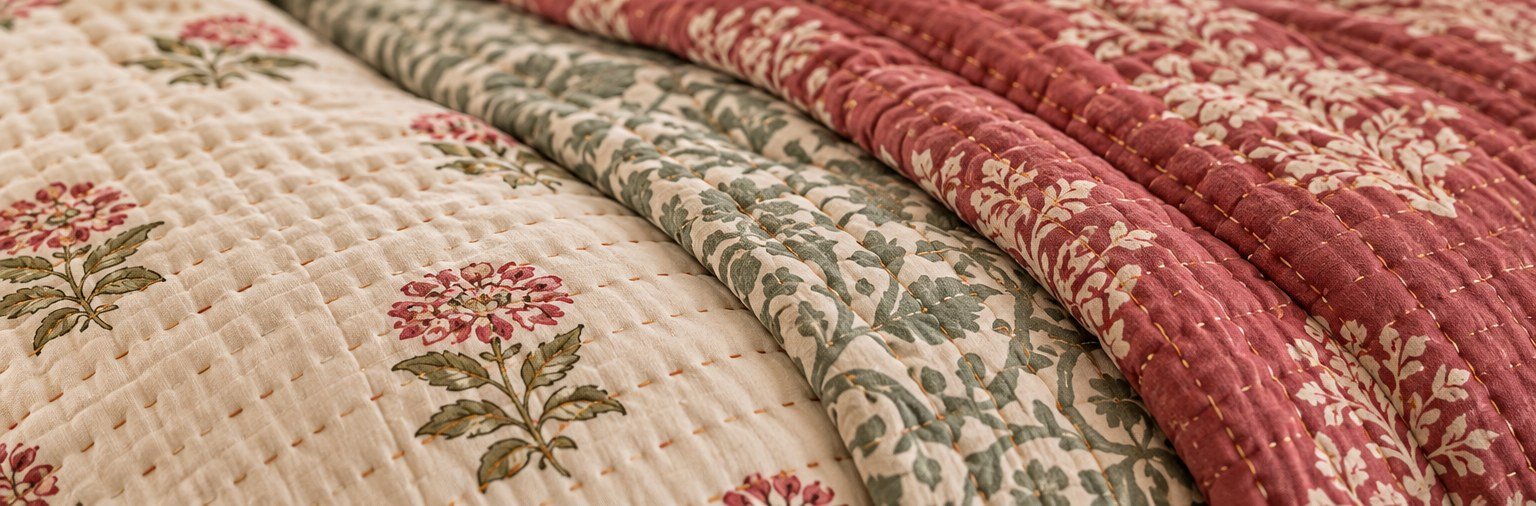
For a quilt, confirm outer fabric, filling material, filling weight and stitching. For a dohar, ask how many layers are used and whether the middle layer is printed or solid. For an AC blanket, confirm fibre composition and breathability. A product photograph cannot answer these questions reliably.
Single, double and beyond
Measure the bed and decide whether the layer is for one sleeper or shared use. A generous overhang looks inviting but adds weight. Children and older users may prefer a lighter layer that is easy to adjust. Check finished dimensions, washability and drying requirements before purchase.
Layer with Rajasthan pattern
Use one printed quilt or dohar over solid sheets for a calm look. Reverse the relationship when the bedsheet is highly patterned: choose a quieter top layer. Fold the quilt across the lower third of the bed to show both textiles and make seasonal adjustment easy.
Layers shaped by climate
Bedding traditions respond to temperature, ventilation and the habits of a household. A lofted quilt traps warmth; a layered dohar offers breathable cover; a light blanket answers the artificial cool of an air-conditioned room. These categories overlap because comfort is personal and construction varies. Their shared story is one of adapting cloth to the changing conditions of night.
The tactile memory of quilts
Quilts carry an intimacy that other furnishings rarely match. Stitching creates a subtle topography, filling shifts with years of use and printed cloth becomes associated with particular seasons or homes. Even a newly made razai enters this emotional territory quickly because it is held close to the body. Its value is therefore not only insulation, but familiarity.
Folding, airing and seasonal ritual
The care of bedding can become a small seasonal ritual: airing layers in gentle sun, checking seams, washing covers and folding winter pieces away when the weather changes. These acts extend useful life and make storage visible as part of ownership. A repaired edge or renewed stitch is not necessarily a loss of beauty; it can become part of the object’s history.
A continuing story
Rajasthan’s craft traditions are best understood as living practices rather than a fixed collection of motifs. Makers, wearers and households continually decide what to preserve, what to adapt and how an object belongs in the present. Looking slowly—at material, process, use and change—creates a richer connection than treating culture as surface decoration.


Leave a comment